
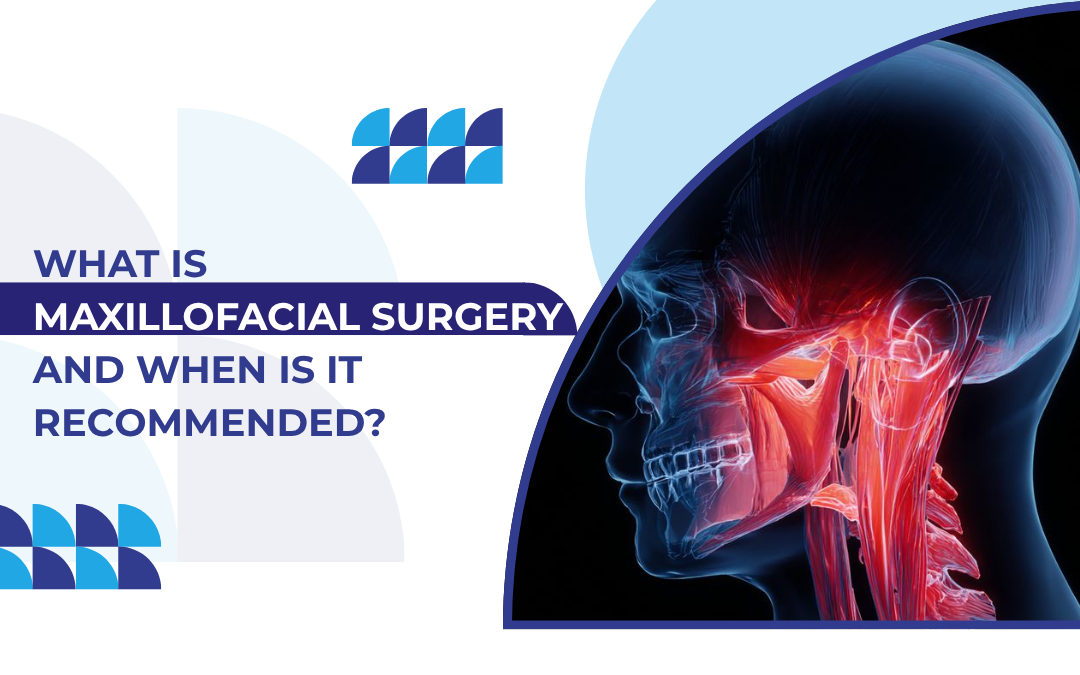
Maxillofacial surgery is a surgical specialty that treats diseases, injuries, and structural conditions of the face, jaws, mouth, teeth, and skull, covering a wide range from impacted wisdom tooth removal and corrective jaw surgery to facial trauma repair, tumour removal, and treatment of cleft lip and palate.
According to a Dental and Maxillofacial Surgeon at Echelon Hospital, a multispecialty hospital in Kopar Khairane,
“Maxillofacial surgery sits at the intersection of dentistry and medicine, which means patients often come to us after being referred from both sides, whether it is a dentist who cannot manage a complex extraction or a physician dealing with a facial fracture or jaw tumour.”
What Conditions Does Maxillofacial Surgery Treat?
The scope of maxillofacial surgery is broad because the specialty covers the entire functional and structural region of the face, mouth, and jaws, addressing both routine oral surgical problems and complex reconstructive cases.
- Impacted teeth and complex extractions: Wisdom teeth that are deeply impacted, positioned at difficult angles, or fused to the jawbone require surgical removal under the care of a maxillofacial surgeon rather than a general dentist.
- Jaw deformities and orthognathic surgery: Conditions where the upper jaw, lower jaw, or both are significantly misaligned, causing difficulty chewing, speaking, or breathing, are corrected through orthognathic surgery that repositions the jaw bones into proper alignment.
- Facial trauma and fractures: Fractures of the jaw, cheekbones, eye socket, or nasal bones resulting from accidents, falls, or sports injuries require surgical repair to restore normal structure, bite alignment, and facial symmetry.
- Oral and jaw tumours and cysts: Benign cysts, tumours of the jawbone, salivary glands, or soft tissues of the mouth, and early-stage oral cancers are diagnosed and surgically managed within the maxillofacial specialty, often in coordination with oncology.
For patients in Navi Mumbai requiring assessment or treatment, the dental and maxillofacial treatment department at Echelon Hospital offers surgical evaluation and management across this full range of conditions.
Concerned about a jaw, facial, or oral condition that may need surgical assessment?
When Does a Patient Need to See a Maxillofacial Surgeon?
Most patients reach a maxillofacial surgeon through a referral from a general dentist, physician, or emergency department, but understanding the situations that typically require this specialist helps patients recognise when to seek assessment sooner rather than later.
- Failed or inadequate response to dental treatment: When a dental infection has spread beyond the tooth into the surrounding bone or soft tissues of the face and neck, or when a tooth cannot be safely removed by a general dentist, a maxillofacial surgeon takes over management.
- Jaw pain, clicking, or limited mouth opening: Temporomandibular joint (TMJ) disorders that do not respond to conservative management including splints, physiotherapy, and medication may require surgical intervention by a maxillofacial surgeon.
- Cleft lip, palate, and developmental facial conditions: Structural conditions present from birth that affect feeding, speech, and facial development are managed through a staged surgical programme coordinated by a maxillofacial and plastic surgery team.
- Pre-implant bone grafting: Patients who have lost significant jawbone volume due to long-standing tooth loss, infection, or trauma may need bone grafting procedures performed by a maxillofacial surgeon before dental implants can be placed successfully.
When a dental problem has progressed beyond what conservative treatment such as root canal treatment can address, maxillofacial surgical assessment is the appropriate next step.
Why Choose Echelon Hospital for Dental and Maxillofacial Care in Kopar Khairane
Echelon Hospital is a NABH pre-accredited multispecialty hospital in Kopar Khairane, Navi Mumbai, with a dedicated dental and maxillofacial department offering the full spectrum of oral surgical care including complex extractions, corrective jaw procedures, facial trauma management, tumour surgery, and implant-related bone grafting. The team operates within a multispecialty environment, ensuring that patients requiring oncology, plastic surgery, or anaesthesia support have access to coordinated care without needing to go elsewhere.
FAQ
Is maxillofacial surgery performed under general anaesthesia?
It depends on the complexity of the procedure. Minor oral surgical procedures such as impacted tooth removal are often done under local anaesthesia with or without sedation, while major jaw corrective surgery, facial reconstruction, and tumour removal are typically performed under general anaesthesia in a hospital setting.
How long is recovery after maxillofacial surgery?
Recovery varies significantly by procedure. Wisdom tooth removal may require a few days, while orthognathic jaw surgery typically involves a hospital stay of one to two days and a recovery period of four to six weeks before returning to normal diet and activity. Swelling and jaw stiffness are expected in the early recovery phase.
Is maxillofacial surgery only for adults?
No. Maxillofacial surgery is performed across all age groups. Children with cleft palate, developmental jaw conditions, or dental injuries are commonly managed from early childhood, while adults are more often treated for trauma, tumours, jaw deformities, and implant-related procedures.
What is the difference between a maxillofacial surgeon and an oral surgeon?
The terms are often used interchangeably. An oral and maxillofacial surgeon is trained in both dentistry and surgery, qualifying them to treat conditions involving the teeth, mouth, jaws, face, and skull. The full title reflects the breadth of the specialty beyond routine dental procedures.
Can maxillofacial surgery correct an overbite or underbite?
Yes. Severe overbite, underbite, or crossbite that cannot be corrected by orthodontics alone is treated through orthognathic surgery, where the jaw bones are surgically repositioned and held in place with plates and screws, usually in combination with orthodontic treatment before and after the procedure.
Disclaimer: This blog is for educational and informational purposes only and should not be considered professional advice.