
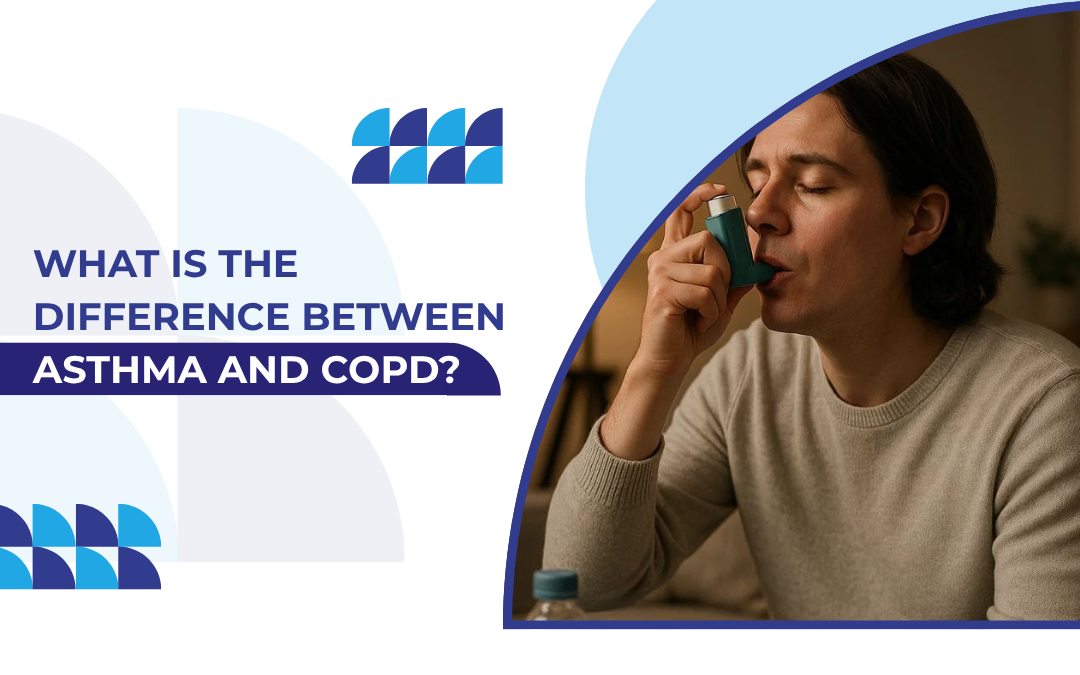
The primary difference is that asthma is a chronic inflammatory airway condition that is largely reversible and often begins in childhood or early adulthood, whereas COPD (chronic obstructive pulmonary disease) involves progressive and largely irreversible airflow obstruction caused primarily by long-term smoking or exposure to harmful substances, and almost exclusively affects adults over 40.
According to a Pulmonologist at Echelon Hospital, a multispecialty hospital in Kopar Khairane,
“Both conditions cause breathlessness, wheezing, and cough, which is why they are frequently confused, but the underlying mechanism, the patient profile, and the long-term treatment approach are quite different, and getting the diagnosis right from the beginning determines how well the condition can be controlled.”
How Do Asthma and COPD Differ in Cause, Age of Onset, and Reversibility?
While both conditions affect the airways and share overlapping symptoms, they arise through different mechanisms and affect different populations, which is why a thorough diagnostic workup including spirometry is essential before treatment is started.
- Cause and underlying mechanism: Asthma is driven by airway hypersensitivity and inflammation triggered by allergens, exercise, cold air, or respiratory infections, causing the airway walls to swell and narrow.
- Age of onset and patient profile: Asthma commonly begins in childhood or early adulthood and affects both sexes equally across all age groups, while COPD almost always develops after the age of 40 in individuals with a significant smoking history or prolonged occupational exposure to dust, chemicals, or fumes.
- Reversibility of airflow obstruction: In asthma, airway narrowing is largely reversible with bronchodilator medication, and many patients have normal lung function between episodes.
- Triggers and symptom pattern: Asthma symptoms are typically episodic, often triggered by specific stimuli, and vary in severity from day to day. COPD symptoms are more constant, worsen with exertion, and progressively limit activity over months and years regardless of trigger avoidance.
For patients in Navi Mumbai with chronic breathing symptoms, the pulmonology care team at Echelon Hospital uses spirometry and clinical assessment to establish an accurate diagnosis and tailor the treatment plan accordingly.
Experiencing persistent breathlessness, wheezing, or chronic cough?
When Should a Patient See a Pulmonologist and How Are the Two Conditions Managed?
Both asthma and COPD require specialist input for accurate diagnosis and long-term management, but the treatment goals and medication strategies differ meaningfully between the two conditions.
- Diagnosis through spirometry: Spirometry, a breathing test that measures how much air is exhaled and how fast, is the gold standard for distinguishing asthma from COPD. A significant improvement in airflow after a bronchodilator dose points toward asthma, while a fixed obstruction that does not improve suggests COPD.
- Asthma management: Treatment centres on inhaled corticosteroids to reduce airway inflammation, combined with short-acting bronchodilators for symptom relief, with the goal of achieving complete symptom control and preventing exacerbations through trigger identification and avoidance.
- COPD management: Treatment focuses on slowing disease progression, reducing symptoms, and preventing exacerbations through long-acting bronchodilators, pulmonary rehabilitation, smoking cessation, and vaccination against respiratory infections, with supplemental oxygen added in advanced disease.
- When breathlessness may signal a cardiac cause: Breathlessness that comes on suddenly at rest, is accompanied by chest tightness, radiates to the arm or jaw, or is associated with sweating may indicate a cardiac rather than a respiratory cause recognising the warning signs of a heart attack is important because both conditions can present with similar symptoms and should never be assumed to be the same.
Adults with either condition should not self-manage based on symptom similarity alone, as incorrect treatment can allow the underlying condition to progress and increase the risk of serious exacerbations.
Why Choose Echelon Hospital for Pulmonology Care in Kopar Khairane ?
Echelon Hospital is a NABH pre-accredited multispecialty hospital in Kopar Khairane, Navi Mumbai, with a dedicated pulmonology department offering spirometry, respiratory assessment, inhaler technique review, and long-term management of asthma, COPD, and other chronic lung conditions. The team follows evidence-based treatment protocols and works within a multispecialty framework, ensuring that patients with overlapping cardiac and respiratory symptoms receive coordinated assessment from both departments.
FAQ
Can a person have both asthma and COPD at the same time?
Yes – this is known as asthma-COPD overlap syndrome and requires a tailored treatment approach combining elements of management from both conditions.
Is COPD only caused by smoking?
Smoking is the most common cause, but long-term exposure to occupational dust, chemical fumes, indoor air pollution, and biomass fuel smoke can also cause COPD in non-smokers.
Can asthma turn into COPD over time?
Poorly controlled asthma over many years can contribute to fixed airflow obstruction, and the risk is higher in patients who smoke, though the two conditions remain distinct diagnoses.
What is an asthma attack and when does it need emergency treatment?
An asthma attack is a sudden worsening of symptoms that does not respond to a reliever inhaler, with severe breathlessness, inability to speak in full sentences, or blue-tinged lips requiring immediate emergency care.
Does COPD shorten life expectancy?
Advanced COPD can reduce life expectancy, but early diagnosis, smoking cessation, and consistent treatment significantly slow progression and improve quality of life for most patients.
Disclaimer: This blog is for educational and informational purposes only and should not be considered professional advice.