
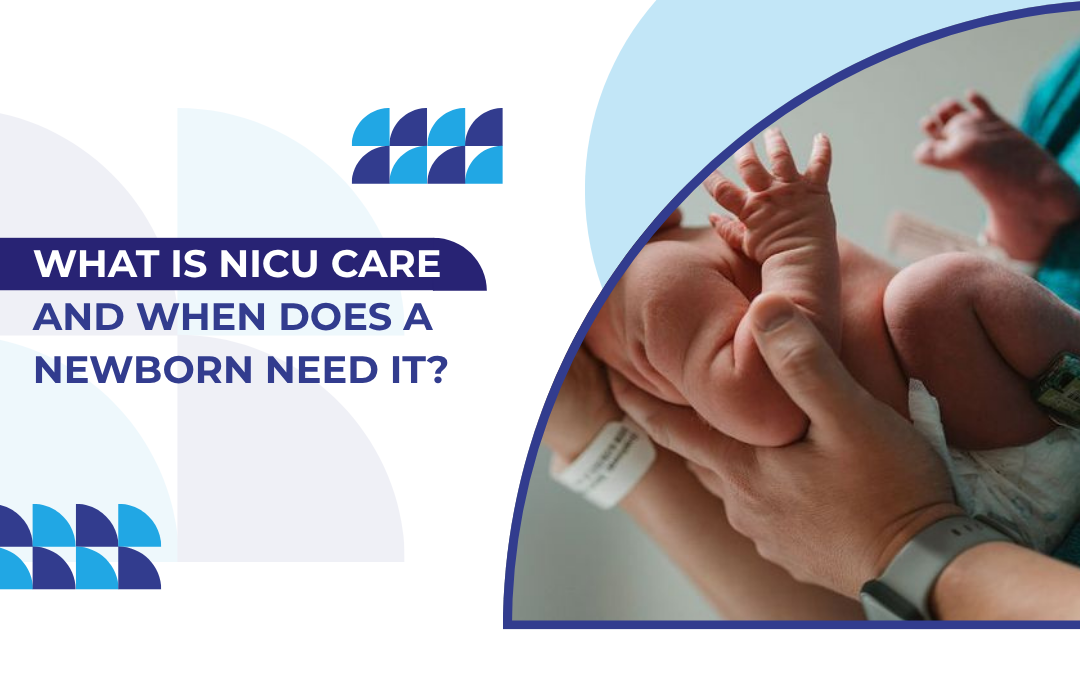
A neonatal intensive care unit (NICU) is a specialised hospital ward equipped to provide continuous monitoring and medical support for newborns who are too premature, too small, or too unwell to be cared for in a standard postnatal ward, with admission criteria ranging from extreme prematurity and respiratory distress to birth asphyxia, severe infection, and congenital conditions requiring urgent intervention.
According to a Neonatologist at Echelon Hospital, a multispecialty hospital in Kopar Khairane,
“A NICU admission is not a sign that something has gone irreversibly wrong. For most families it is an intensive period of close monitoring and support while the baby’s systems mature or stabilise, and the majority of babies who go through the NICU go on to do very well.”
What Conditions Require a Newborn to Be Admitted to the NICU?
NICU admission is not limited to premature births. A full-term baby can also require intensive neonatal care if complications arise during or after delivery that affect breathing, circulation, blood sugar, or neurological function.
- Premature birth before 37 weeks: Babies born early have underdeveloped lungs, immune systems, and temperature regulation, making them unable to survive without specialised respiratory support, feeding assistance, warmth through an incubator, and close monitoring for complications such as apnoea and infection.
- Low birth weight and growth restriction: Babies weighing less than 2.5 kg at birth, particularly those significantly below average for their gestational age, are at higher risk of hypothermia, hypoglycaemia, and feeding difficulties that require NICU-level monitoring and support.
- Respiratory distress and breathing problems: Conditions including respiratory distress syndrome, transient tachypnoea of the newborn, meconium aspiration, and persistent pulmonary hypertension require oxygen therapy, continuous positive airway pressure (CPAP), or mechanical ventilation available only in the NICU.
- Birth asphyxia, infection, and congenital conditions: Babies who experienced oxygen deprivation at birth, show signs of neonatal sepsis, or are born with congenital heart defects, metabolic disorders, or surgical conditions require the monitoring, medication, and specialist access that only a NICU environment provides.
Families expecting a premature or high-risk delivery can discuss NICU preparedness and neonatology support at Echelon Hospital before delivery so they know what to expect if their baby requires admission.
Concerned about your newborn’s health or a high-risk pregnancy?
What Happens Inside the NICU and What Should Parents Expect?
The NICU environment can feel overwhelming at first, but understanding what the equipment, routines, and care team do helps parents feel more involved and less anxious during what is often a deeply stressful period.
- Monitoring and equipment: Every NICU baby is connected to monitors tracking heart rate, oxygen saturation, respiratory rate, and temperature continuously, while lines and tubes may deliver fluids, nutrition, and medication or support breathing depending on the baby’s condition.
- Temperature regulation and feeding support: Premature and low birth weight babies are nursed in incubators or radiant warmers to maintain a stable body temperature, and feeding is managed through a nasogastric tube until the baby is strong enough to breastfeed or bottle-feed effectively.
- Parental involvement and skin-to-skin care: Parents are encouraged to participate actively in NICU care through kangaroo mother care, which involves placing the baby skin-to-skin on the parent’s chest, a practice strongly supported by evidence for improving temperature stability, weight gain, and bonding.
- Discharge planning and follow-up: A baby is discharged from the NICU when they can maintain their own body temperature, feed adequately, and breathe without support, after which follow-up appointments with a neonatologist monitor growth, development, and any ongoing needs.
Understanding the complete newborn care pathway, including newborn vaccines and the immunisation schedule that follows discharge, helps parents plan for their baby’s health in the months after leaving the NICU.
Why Choose Echelon Hospital for Neonatal Care in Kopar Khairane ?
Echelon Hospital is a NABH pre-accredited multispecialty hospital in Kopar Khairane, Navi Mumbai, with a fully equipped NICU providing level-appropriate neonatal intensive care for premature and critically ill newborns, supported by experienced neonatologists, trained nursing staff, and advanced respiratory and monitoring equipment. The unit operates within a multispecialty environment, ensuring that newborns requiring paediatric surgical, cardiac, or neurological input receive coordinated care without transfer delays.
FAQ
How long does a baby typically stay in the NICU?
Length of stay depends on the reason for admission, ranging from a few days for mild breathing issues to several weeks or months for very premature babies.
Can parents visit their baby in the NICU at any time?
Most NICUs allow parents unrestricted or extended visiting hours and actively encourage their involvement in daily care routines.
Is a NICU stay always planned in advance?
No – many NICU admissions are unplanned and occur because complications arise unexpectedly during or after delivery.
Does a NICU stay affect a baby's long-term development?
Many NICU graduates develop normally, though premature or very ill babies benefit from structured developmental follow-up to identify and support any needs early.
What is the difference between a NICU and a special care nursery?
A NICU provides intensive care for the most critically ill or premature babies, while a special care nursery supports babies who need observation or minor assistance but are not critically unwell.
Disclaimer: This blog is for educational and informational purposes only and should not be considered professional advice.