
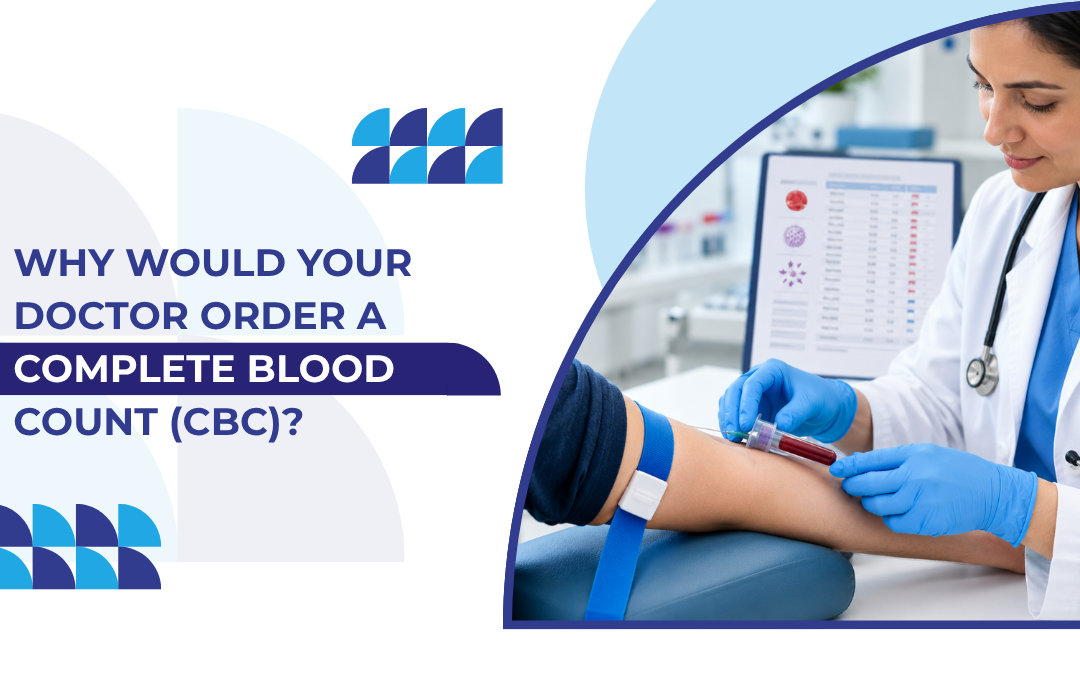
Most people have a complete blood count (CBC) either as part of a routine check-up or because their doctor wants to find out why they’ve been feeling run down for weeks. It also helps confirm what’s behind a condition and shows how a treatment is working. It’s one of the most common blood test orders there is, and all it takes is a small sample from a vein in your arm.
According to a senior pathologist at Echelon Hospital, a multispecialty hospital in Navi Mumbai, “A CBC is a snapshot, not a verdict. It shows which blood cells are low, high or unusual in size, and that tells us what question to ask next. Rarely does one number settle anything on its own.”
What Does a Complete Blood Count Test Actually Count?
It’s a head count of the cells in your blood, plus a check on how big they are. Those totals show how much oxygen your blood is moving, how active your defences are and whether it clots the way it should.
- Red blood cells and haemoglobin: red cells carry oxygen around the body, and haemoglobin is the iron-rich protein inside them that actually holds it. Low haemoglobin levels are how anaemia is usually picked up, and then the investigation for the cause begins.
- White blood cells: your body’s defence force. Their numbers tend to rise when you’re fighting an infection and may fall if a medicine or a bone marrow problem is holding production back. A CBC with differential breaks the total into the five main types.
- Platelets: they’re small fragments that gather at a cut to stop the bleeding. If there are too few, you may bruise easily or bleed for longer, and if there are too many, a doctor may look for the reason.
- Haematocrit and red cell size: haematocrit is the percentage of your blood that is red cells, and MCV is how big those cells are on average. Small or large cells give clues about what’s behind anaemia.
You usually don’t need to prepare for this blood test. The blood is drawn in a few minutes, and a machine in the clinical laboratory does the counting.
Wondering why a CBC is on your lab slip? Ask your doctor which question it’s meant to answer.
When Would a Doctor Want a CBC?
Doctors order it at different stages. It might be a baseline taken while you feel fine, a first step when a symptom is worrying you, or a way to see how a treatment is working.
- Routine check-ups and before surgery: a CBC sets a baseline and can catch a quiet problem, such as mild anaemia, early. Hospitals often include it in the tests done before an operation.
- Unexplained symptoms: feeling weak or tired for weeks, a fever that won’t go, bruises that appear from nowhere, or bleeding that’s hard to stop can all lead to a CBC. The counts often show which direction the next tests should take.
- Diagnosing a condition: anaemia, infections, immune problems and blood disorders can all leave a mark on the counts. That mark is a clue, and doctors usually need other tests before naming the cause.
- Monitoring treatment: chemotherapy, radiation and a few other medicines can lower blood cell counts, so the CBC is repeated during treatment to catch changes early. People with long-term blood conditions have them done regularly too.
A CBC is often drawn along with other blood tests. To understand what another common test checks, read our guide to the liver function test (LFT) panel.
What Does an Abnormal CBC Result Mean?
Each value is printed next to a normal range, which differs between labs and with your age and sex. Falling outside that range gives your doctor something to look into, and it isn’t a diagnosis.
- Low red cells or haemoglobin: that’s anaemia in most cases, caused by anything from low iron or vitamins to blood loss or another medical condition. Higher-than-usual values can simply mean you’re dehydrated, but sometimes they point to heart disease or a blood disorder.
- White cells out of range: infection or inflammation is the most common cause of a high count, though some medicines and hard exercise can do it too. Low counts tend to come from autoimmune conditions, bone marrow problems or some medicines.
- Platelets out of range: a low count is called thrombocytopenia and a high one thrombocytosis. Either can come from a medicine or an underlying condition, and tracing the cause usually takes more tests.
- Slightly off numbers: a period, a dry day or a new medicine can move the result a little. If there are no symptoms and the number is only just outside the range, a doctor may simply leave it alone.
Counts that are well outside the range can lead to a referral to a hematology specialist, the doctor who looks after blood disorders.
Key Takeaways: A CBC measures red cells, white cells, platelets, haemoglobin and cell size, all from one small sample. Check-ups, unexplained symptoms, diagnosis and treatment follow-up are the usual reasons a doctor asks for it. A number outside the range raises a question, nothing more. The report only makes sense next to your symptoms and other tests.
FAQ
Do I need an empty stomach for a CBC?
Usually not. The exception is when other tests are run on the same sample, and the lab will tell you.
How long does a CBC take?
The blood draw takes a few minutes. Reports come back within a day at many labs, but it depends on the lab.
Is a full blood count the same as a CBC?
Yes. CBC, full blood count and blood cell count are different names for the same test.
Can a normal CBC rule out a disease?
No. It’s one tool among many, and doctors read it alongside your symptoms, history and other tests.
References
-
MedlinePlus, Complete Blood Count (CBC): https://medlineplus.gov/lab-tests/complete-blood-count-cbc/
-
Mayo Clinic, Complete Blood Count (CBC): https://www.mayoclinic.org/tests-procedures/complete-blood-count/about/pac-20384919
Disclaimer: This blog is for educational and informational purposes only and should not be considered professional advice.