
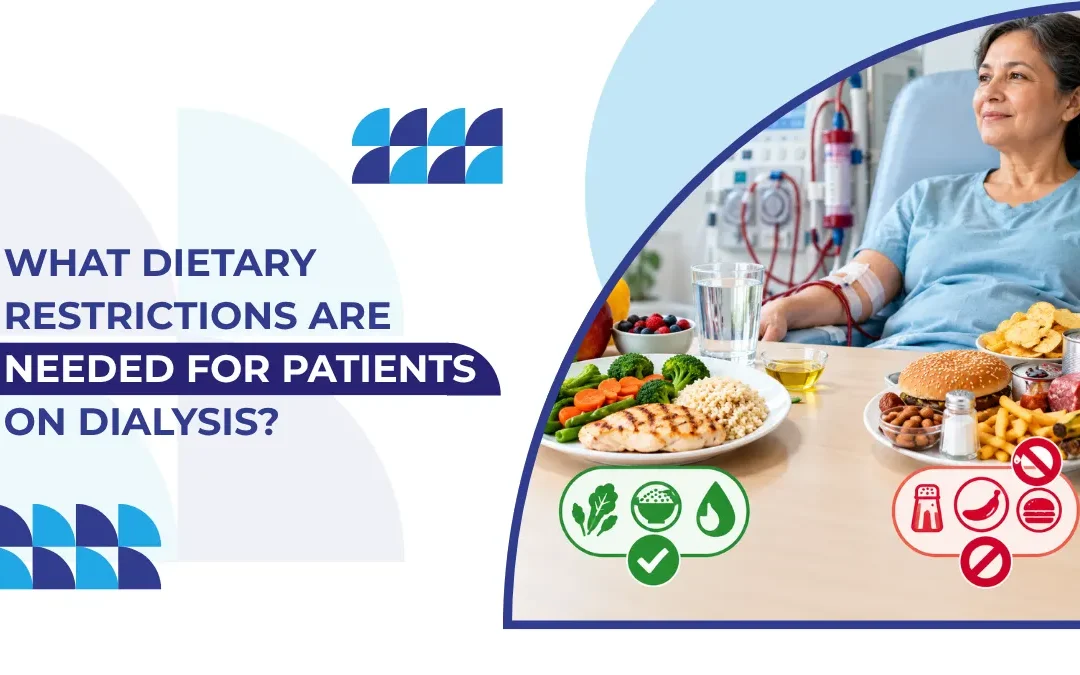
Ask anyone on dialysis and they’ll tell you the diet is part of the treatment. Between sessions the machine isn’t working, so fluid, potassium and phosphorus collect, and the heart and bones pay for it. A dialysis diet holds that in check, and dialysis diet restrictions vary from one person to the next.
According to a senior nephrologist at Echelon Hospital, a multispecialty hospital in Navi Mumbai, “Patients often ask for a list of banned foods. A list is only a starting point. What a person can eat depends on their blood reports, their dialysis schedule and how much urine they still pass, so the plan has to change when those change.”
Why Are Some Foods a Problem on Dialysis?
Fluid, potassium, phosphorus and salt do most of the damage, because the kidneys can no longer clear them between sessions.
- Fluids: a daily limit protects the heart and lungs. Soup, ice cream and watermelon all use up part of it.
- Potassium: too much can disturb the heart rhythm. Bananas, oranges, tomatoes and potatoes are usually cut to small portions on hemodialysis.
- Phosphorus: it rises silently and slowly weakens the bones. Dal, dairy, nuts and packaged foods are the big contributors.
- Salt: it makes you drink more, and extra fluid is the last thing you need. Pickles and papad add up fast, and salt substitutes carry potassium.
None of these limits is fixed. Your nephrologist and dietitian revisit them as your lab results change.
Not sure what is safe on your plate? Consult a nephrologist for guidance.
Will You Have to Eat Less on Dialysis?
Not always. Some patients lose weight because of a poor appetite, and that brings its own risks.
- Protein: eggs, fish and chicken are usually encouraged, in portions the dietitian sets. Vegetarians will need a different plan.
- Calories: weight loss from a weak appetite is worth reporting early. The dietitian can suggest ways to add energy, and diabetics should ask before adding sweets.
- Supplements: only a kidney-specific vitamin prescribed by your doctor is safe. Shop-bought vitamins can do real harm.
- Peritoneal dialysis: it’s done daily, so the plan is often looser, and some patients even need more potassium. The dialysis fluid adds sugar, which can add weight.
The amount that builds up depends on how long the gap is. This read on why dialysis is done regularly explains the schedule.
What Does Day-to-Day Life on a Dialysis Diet Involve?
Rules like these take a few weeks to sink in. After that most of it runs on habit.
- Renal dietitian: a specialist in kidney nutrition who builds the plan around food you already like. Take your recent reports to every visit.
- Liquids: a small cup tells you how much you’ve had. Count tea, soup and watery dal as well as water.
- Cooking: fresh home cooking keeps salt down. Labels often hide sodium, and an ingredient with “phos” in its name usually means added phosphorus.
- Other conditions: diabetes and high blood pressure often come along. The diet has to suit all of them, so the teams treating you should talk to each other.
Diabetes often goes hand in hand with kidney disease, and this read on why a dietician helps manage diabetes shows how a food plan gets adjusted around it.
Key Takeaways: A dialysis diet keeps fluid, potassium, phosphorus and salt under control between sessions. It isn’t a plan for eating less, because protein and calories still matter. Hemodialysis and peritoneal dialysis need different diets, adjusted according to blood reports. Ask the dialysis team before changing meals or starting a supplement.
FAQ
Can someone on dialysis still eat fruit?
Yes, in sensible amounts. The dietitian will tell you which ones, since bananas, oranges and dried fruit are rich in potassium.
What is the daily fluid limit on dialysis?
There’s no single number. The doctor sets it for each person, and soup and tea count towards it.
Is the diet the same for both types of dialysis?
No. Peritoneal dialysis runs daily, so the rules tend to be looser. Some patients even need extra potassium.
Should dialysis patients cut down on protein?
Usually not. Most need good protein such as eggs, fish and chicken, in measured portions.
References
-
National Institute of Diabetes and Digestive and Kidney Diseases (NIDDK), Eating & Nutrition for Hemodialysis: https://www.niddk.nih.gov/health-information/kidney-disease/kidney-failure/hemodialysis/eating-nutrition
-
National Institute of Diabetes and Digestive and Kidney Diseases (NIDDK), Eating & Nutrition for Peritoneal Dialysis: https://www.niddk.nih.gov/health-information/kidney-disease/kidney-failure/peritoneal-dialysis/eating-nutrition
Disclaimer: This blog is for educational and informational purposes only and should not be considered professional advice.