
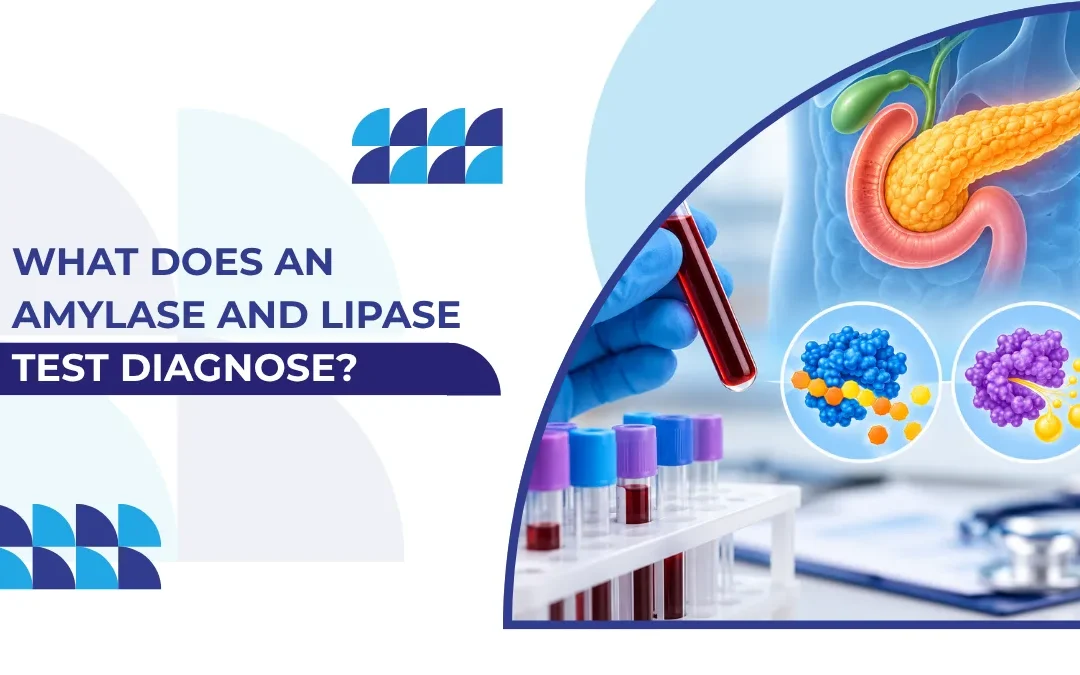
An amylase and lipase test is usually ordered when a patient has upper abdominal pain that radiates to the back, often accompanied by vomiting. Both are digestive enzymes made by the pancreas, and an inflamed gland lets far more of them into the blood than normal. So the test is mainly used to help diagnose acute pancreatitis, which is a sudden swelling of the pancreas.
According to a senior gastroenterologist at Echelon Hospital, a multispecialty hospital in Navi Mumbai, “Lipase tells us more. Amylase is also made in the salivary glands, so it can be raised by a problem that has nothing to do with the pancreas. We order both and read them with the symptoms. The number is a clue, and the history and the scans decide what it means.”
What Are Amylase and Lipase, and What Does the Test Measure?
Both are digestive enzymes: amylase works on carbohydrates and lipase works on fat, and the pancreas makes the bulk of each. Healthy blood holds only small amounts, so an inflamed pancreas shows up as a sharp rise.
- Amylase: it is produced by both the salivary glands and the pancreas. That overlap is why a high reading doesn’t necessarily mean the pancreas is the problem.
- Lipase: mostly produced by the pancreas, with a small share from the salivary glands and stomach. Doctors rely on it more for pancreatitis, and most of all when alcohol is the suspected cause.
- Blood versus urine: amylase appears in the blood before it appears in the urine. That’s why a urine sample is sometimes collected after the blood test.
- Preparation: the two tests ask different things of you. Before amylase, avoid alcohol for 24 hours. Before lipase, you may be told to go 8 to 12 hours without food. If the lab’s instructions differ, follow the lab.
The draw itself takes a few minutes. After that the lab sets your number against its own reference range, and that range can differ from one lab to another.
Got your amylase and lipase test report? Find out what your results mean and whether you need further evaluation.
What Can an Amylase and Lipase Test Diagnose?
Most of the time the test is ordered to confirm or rule out acute pancreatitis. Other conditions can move the numbers as well, so the pain, where it sits and the person’s history all count.
- Acute pancreatitis: a very high lipase usually settles the question. The pain hits suddenly in the upper belly and can be severe. It often gets worse after eating, and nausea or vomiting usually come with it.
- Blocked ducts, cysts and tumours: if a duct in the pancreas is blocked, or a cyst or tumour is growing there, the enzymes can climb for that reason.
- Chronic pancreatitis: in long-standing disease the readings may be low, since so many enzyme-making cells have been lost. Doctors use the test to keep an eye on how the disease is progressing.
- Causes outside the pancreas: gallbladder disease, an ulcer, a blocked bowel, kidney disease and salivary gland disorders are also on the list of things that raise the numbers.
Yellowing of the skin or eyes may point to a problem with the liver or bile ducts. This article on a liver function test (LFT) panel shows how they are checked.
What Happens After an Abnormal Amylase and Lipase Result?
An abnormal result starts a search and doesn’t end one. Pancreatitis is confirmed by putting together the symptoms, the blood results and, for some people, a CT scan.
- Reading the result with your symptoms: raised enzymes plus sudden, severe upper belly pain, or pain that goes straight through to the back, make pancreatitis very likely. The same level in someone with no symptoms is read differently.
- Checking your medication: some medicines nudge lipase up or down, including codeine, water tablets, certain cholesterol drugs and birth control pills. Tell your doctor which medications you take, and continue taking them unless advised otherwise.
- Identifying the cause: most acute pancreatitis traces back to gallstones or heavy drinking. Blood tests and scans look for a stone or a blockage.
- Hospital treatment: the gastroenterology department takes care of acute pancreatitis in hospital. Treatment means fluids through a vein, painkillers and dealing with the underlying cause. Most people start to improve within a week and go home after 5 to 10 days.
Sudden, severe belly pain that spreads to the back needs urgent care, so don’t wait it out. Ask someone to drive you or call an ambulance instead of driving yourself.
Key Takeaways: Amylase and lipase are made in the pancreas and leak into the blood when it is inflamed, which is exactly what this test picks up. Lipase is the more useful of the two for acute pancreatitis. Other organs can raise either one, so doctors read the numbers alongside symptoms and scans.
FAQ
Do you have to fast for an amylase and lipase test?
It varies. Lipase can need 8 to 12 hours without food, and for amylase the usual advice is no alcohol for 24 hours. The lab will say which applies.
Which enzyme is more reliable for pancreatitis, amylase or lipase?
Lipase usually, and it matters most when alcohol is behind the pancreatitis. Many doctors order both anyway to see the whole picture.
Do raised enzymes always mean the pancreas is inflamed?
No. Gallbladder trouble, an ulcer, kidney disease, a blocked bowel or a salivary gland problem can raise them, and so can some medicines.
What does a low amylase or lipase level mean?
It isn’t common. It can mean long-term pancreas damage, as in chronic pancreatitis or cystic fibrosis, and low amylase has also been tied to kidney or liver disease.
References
- MedlinePlus, Amylase Test: https://medlineplus.gov/lab-tests/amylase-test/
- MedlinePlus, Lipase Tests: https://medlineplus.gov/lab-tests/lipase-tests/
-
National Health Service (NHS), Acute Pancreatitis: https://www.nhs.uk/conditions/acute-pancreatitis/
Disclaimer: This blog is for educational and informational purposes only and should not be considered professional advice.