
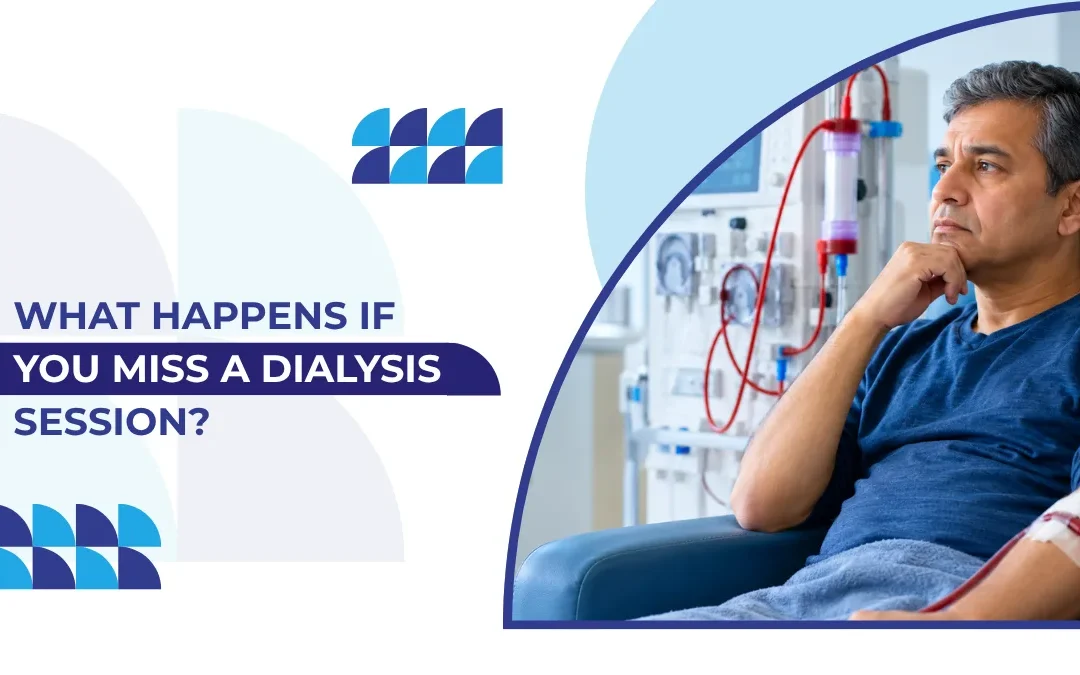
Dialysis does the work failed kidneys can’t, so nothing else steps in when a session is skipped. Water, waste and potassium pile up within a day or so, and the heart is the first organ to feel it. That is why missing a dialysis session is a medical problem and not a scheduling one. Some people get through with a rough couple of days, others end up in the emergency room.
According to a senior nephrologist at Echelon Hospital, a multispecialty hospital in Navi Mumbai, “People are often surprised that they feel fine the day after a missed session. Potassium and fluid rise quietly, and the first sign can be a heart rhythm problem or sudden breathlessness. Dialysis keeps both in check, which is why the schedule has to be treated as fixed.”
What Happens in the Body When You Miss a Dialysis Session?
Picture a Monday, Wednesday and Friday schedule where Friday gets missed. Nothing cleans the blood between Wednesday’s session and the next one on Monday, and that is five days.
Fluid buildup: Whatever you drink stays in, tea and water alike. The scale usually gives it away first, since a litre is a kilo, and puffy ankles come next. Once fluid reaches the lungs, lying flat feels impossible.
Potassium rise: Blood potassium should stay between about 3.5 and 5.0 mmol/L. Beyond 6 or so the heartbeat can turn irregular. Some people get a flutter or sudden weakness first, but plenty get no warning.
Waste buildup: Urea doesn’t announce itself. Food starts tasting off, hunger disappears and the skin itches in a way creams don’t touch. Confusion shows up late, once levels are high.
Blood pressure and acid: More fluid in the vessels means higher blood pressure. Acid builds up too, which is why breathing turns quick and deep as the lungs try to clear it.
The next session then has a bigger backlog to clear. Kidney function tests and the electrolyte panel that tracks potassium are both run in a biochemistry lab, and those results guide how much fluid is taken off.
Missed one already? Here is what is going on in the body and who to ring.
What Are the Warning Signs After Missing a Dialysis Session?
Symptoms don’t follow a clock. Some people feel rough by the next evening. Others are fine for a day or two, which is exactly why a quiet first night isn’t reassuring.
Breathlessness or swelling: Extra pillows at night, a cough that wakes you or eyelids that look swollen first thing all suggest fluid is collecting.
Palpitations or weakness: A fluttering, pounding or skipping heartbeat can mean potassium is high. Sudden weakness in the legs on the stairs is another clue.
Nausea, itching or confusion: Repeated vomiting or itching that keeps you awake points to waste building up. Relatives often spot slurred or muddled speech and odd sleepiness before the patient does.
Chest pain or fainting: Go to the emergency department at once for either of these. Don’t ring the unit first and wait for a call back.
The reason the timetable is fixed in the first place is covered in this piece on why dialysis is done regularly. How you feel the next morning is a poor guide to what the blood tests would show.
What Should You Do After Missing a Dialysis Session?
The first move is a phone call to your dialysis unit, made as early as possible. After that the aim is to keep fluid and potassium from climbing until the replacement session.
Call the dialysis unit: Ideally before the session is missed, or straight after. Many units can squeeze in a replacement slot, and the earlier they hear the easier it is to find one.
Hold to the diet limits: Follow the fluid and salt limits recommended by your dietitian. Bananas, potatoes, tomatoes and coconut water are the usual high-potassium foods to leave out for now.
Don’t wait for symptoms: Potassium can be dangerously high with no warning at all. How you feel is not a test result, so book the session anyway.
Say why you missed it: Tell the unit what got in the way. It might be the journey or the cost, tiredness after treatment or an illness, and they’ve heard all of it before. Depending on the reason, there may be options such as a different time slot, a centre closer to home or home dialysis.
How soon you dialyse again, and how strict the diet should be meanwhile, is your nephrologist’s decision. Tell the unit about every skipped session so your next blood results can guide the plan.
Key Takeaways: Skipping dialysis leaves fluid, potassium and waste in the blood, and the heart takes the hit. Seek medical assessment the same day for swelling, breathlessness, a racing heartbeat or confusion, and go to the emergency department for chest pain or fainting. Ring the unit early, because that is what gives them room to find you another slot.
FAQ
How many dialysis sessions can you miss?
Ideally none. A single skipped visit turns the usual two or three day gap into four or five, which is plenty of time for fluid and potassium to climb. If you know you’ll miss one, tell the unit that day.
How long can you go without dialysis?
It depends on how much kidney function you still have, so there’s no one number. Many people on regular dialysis feel seriously unwell after only a few days, so ask your own team what is safe for you.
Can you make up for a missed dialysis session?
Usually, yes. Once the unit has checked your symptoms and recent results it will book the first slot that is safe for you. Sometimes that is the very next day.
When is a missed dialysis session an emergency?
Seek emergency medical care immediately for chest pain, fainting, trouble breathing, a racing or irregular heartbeat or sudden confusion. Sitting on any of these until the next scheduled session is not safe.
References
-
National Institute of Diabetes and Digestive and Kidney Diseases (NIDDK), Hemodialysis: https://www.niddk.nih.gov/health-information/kidney-disease/kidney-failure/hemodialysis
-
National Health Service (NHS), Dialysis: https://www.nhs.uk/tests-and-treatments/dialysis/
Disclaimer: This blog is for educational and informational purposes only and should not be considered professional advice.