
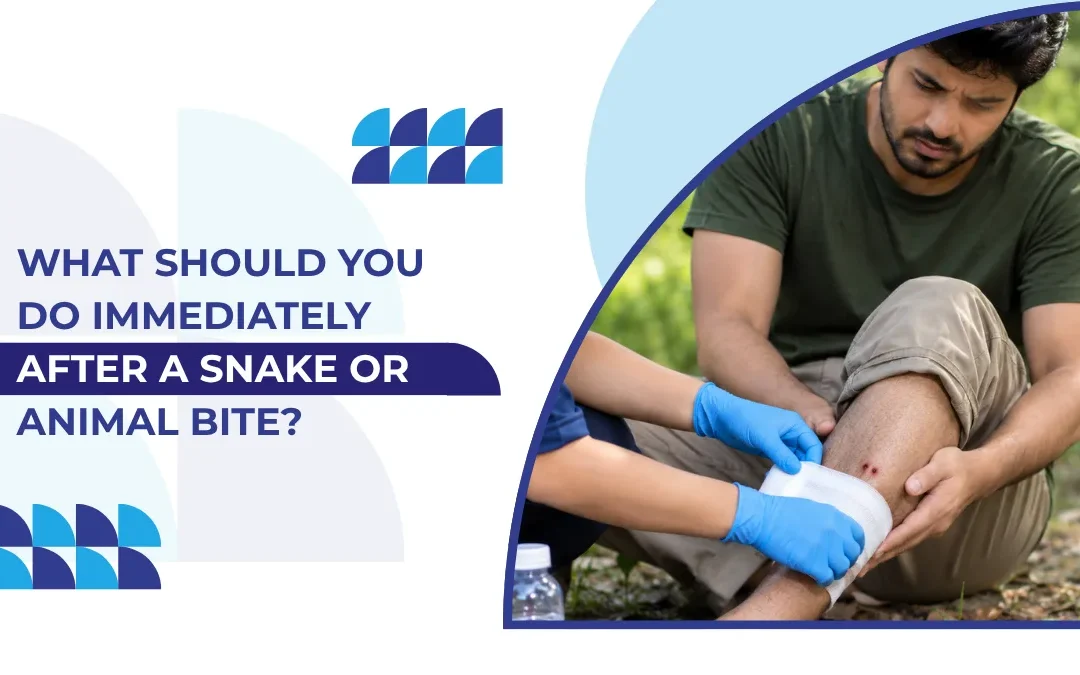
Most people’s first reaction to a bite is to wait and see how it goes. Don’t. Whether it was a snake or a stray dog, call for help or get to a hospital straight away. Basic snake bite first aid treatment can be done on the way.
According to the emergency physician at Echelon Hospital, a multispecialty hospital in Navi Mumbai, “Most of the harm after a bite comes from delay and home remedies, not the bite itself. Keep the person still, get them to a hospital, and let the doctors assess it. In the first hour, that one decision counts for more than anything else.”
What Is the Right Snake Bite First Aid Treatment and What Should You Avoid?
Home care won’t fix a snake bite. What you’re really doing is buying time for the doctors.
- Keep them still: sit or lay the person down and stop them from pacing about. Walking and panic both speed up circulation, and venom rides along with the blood. A calm voice helps more than you’d expect.
- Rest the limb: keep the bitten hand or leg around heart level and still, like a splinted fracture. Get rings, bangles and watches off now, because swelling will trap them quickly.
- Note the details: write down the time of the bite, since doctors ask for it first. A photo of the snake helps only if someone can take it from several metres away, and catching or killing it is never worth a second bite.
- Skip the folk remedies: tourniquets, cuts, sucking the wound, ice and turmeric or herbal pastes either do damage or waste time the patient doesn’t have. The patient should not drive themselves to the hospital. Call an ambulance if possible, or ask a family member or friend to drive them to the nearest emergency centre.
If you’re hunting for a trauma centre near me, check one thing first: is emergency and trauma care staffed through the night? Snake bites can become life-threatening quickly.
Not sure whether a bite is serious? Let a doctor decide, and do it early.
What Should You Do After a Dog, Cat or Monkey Bite?
Rabies is the main worry with these bites, even when the skin has hardly broken. At home you can only do the first few minutes of care, and then it’s the doctor’s turn.
- Wash it for 15 minutes: hold the wound under running tap water with soap and don’t stop early. Use a timer, because 15 minutes drags.
- Cover it loosely: put on some antiseptic and lay a clean cloth over the top. Don’t tape or stitch the wound shut, since infection can hide underneath.
- Go the same day: a puppy’s scratch or a pet cat’s puncture counts too. Small bites are the ones most often brushed off.
- Ask about shots: it might be a rabies vaccine, tetanus cover or both, depending on the animal and your vaccination record. The doctor will sort out which.
Is it a trauma centre case or just a clinic visit? Many people can’t tell. This short read on what a trauma centre is and when to go to one answers that.
Which Symptoms Mean a Bite Is Getting Worse?
Some bites look fine for an hour or two and then change. These are the signs you shouldn’t ignore.
- Swelling that spreads: puffiness, bruising or blisters creeping past the bite, with pain climbing the limb, tend to appear early when venom is involved.
- Eyes and face: drooping eyelids, blurred vision, a thick-feeling tongue or trouble swallowing point to the nerves being affected.
- Breathing and pulse: shortness of breath, a pounding heart, dizziness or fainting mean the situation is critical.
- Infection after an animal bite: spreading redness, pus, fever or a wound that keeps bleeding means it’s getting worse, however small it looked at first.
If you notice any of these, go for emergency care without waiting. For patients who become very ill, this read on what an ICU is and when it is needed explains what intensive care involves.
Key Takeaways: Every snake bite, and every animal bite that breaks the skin, deserves a hospital visit. Keep the person still, wash animal bites for 15 minutes, and leave out tourniquets, cutting and home remedies. Spreading swelling, breathing trouble or signs of infection mean there’s no time to lose. The earlier the patient reaches the hospital, the more treatment options may be available.
FAQ
Is every snake bite an emergency?
Yes. Most people can’t tell a venomous snake from a harmless one in the moment, so a hospital check is the safe call.
Should I apply a tourniquet to a snake bite?
No. A tight band can hurt the limb more than it helps. Keep it still and get to a hospital.
How long should I wash an animal bite?
Run it under tap water with soap for 15 minutes, then see a doctor.
Can I wait for symptoms before going to hospital?
No. Some signs only show up hours later, and by then treatment is harder.
References
-
World Health Organization, Snakebite Envenoming: https://www.who.int/news-room/fact-sheets/detail/snakebite-envenoming
-
World Health Organization, Rabies: https://www.who.int/news-room/fact-sheets/detail/rabies
Disclaimer: This blog is for educational and informational purposes only and should not be considered professional advice.