
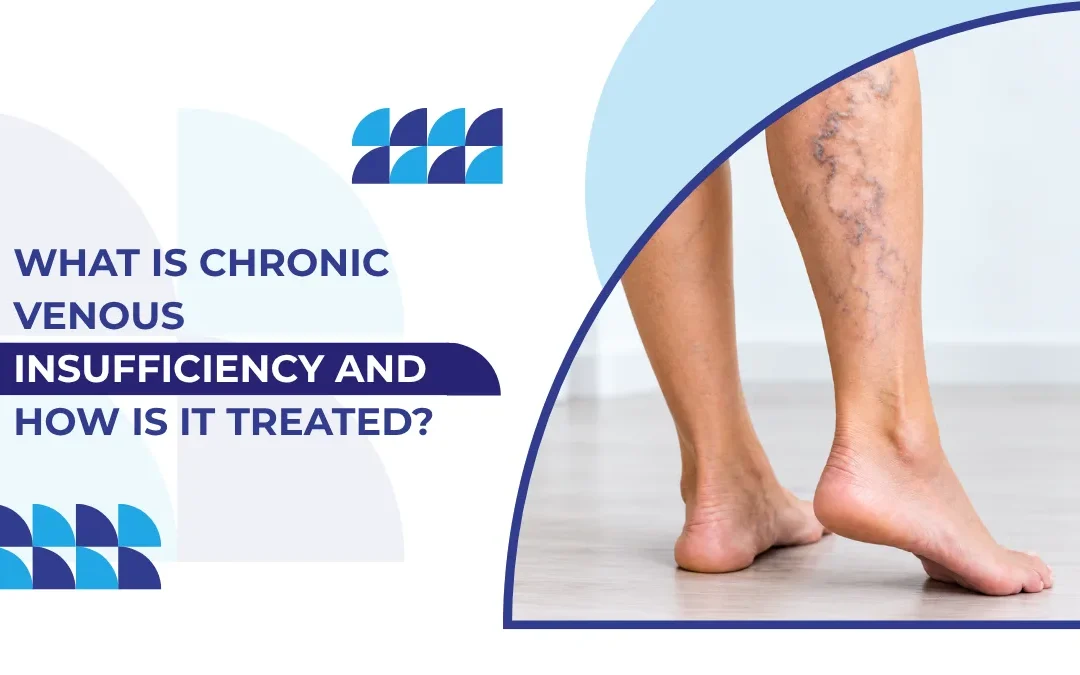
Chronic venous insufficiency (CVI) is a long-term vein condition. The valves inside the leg veins no longer shut tightly, so blood that ought to climb back to the heart drifts down and settles around the ankles. It doesn’t clear up by itself. Varicose veins are often what people spot first, and chronic venous insufficiency treatment can mean anything from stockings and walking to a short procedure.
According to a consultant at Echelon Hospital, a multispecialty hospital in Navi Mumbai,“Swollen ankles at the end of the day are easy to dismiss, which is why CVI is often found late. The valves don’t repair themselves, but early steps like compression and regular walking can slow the damage and protect the skin.”
What Damages Vein Valves and How Do You Spot CVI?
Age is the biggest factor, but prolonged standing, pregnancy, extra weight, family history and a past clot in a leg vein all raise the odds. It develops over years, so most people blame tired legs for a long time.
- Heavy legs: many people notice it around four in the afternoon. A spell lying down with the feet raised usually takes the edge off.
- Swollen ankles: shoes feel tighter at night than in the morning, and socks leave grooves behind. Long stretches of standing make it worse.
- Varicose veins: rope-like, bluish veins on the calves or behind the knees stand out when you’re upright. They don’t always mean CVI, but the two often go together.
- Skin changes and sores: itching, dry or scaly skin and brownish patches around the ankle can appear over the years. In advanced cases a sore that is slow to heal, called a venous ulcer, can develop.
To see whether the valves are leaking, doctors usually order a Doppler test. It’s a scan that uses sound waves and needs no incision.
Do your legs feel heavy or swollen by evening? Get them assessed early.
What Helps With CVI at Home?
Home care won’t repair damaged valves, but it can ease symptoms and slow things down. That’s why most plans begin with it.
- Compression stockings: they’re tighter at the ankle and looser higher up, which keeps blood moving in the right direction. Put them on soon after waking, before the day’s swelling sets in, and take them off at night. Get the strength checked first, because they aren’t suitable if the arteries in the leg are also narrowed.
- Raise the legs: rest your feet on a couple of pillows so they sit above heart level for 15 to 20 minutes, two or three times a day. Right after work is an easy slot to stick to.
- Keep moving: the calf muscles work like a pump, and a brisk 20 minute walk does more good than sitting with your feet up. On a long desk day or a flight, rolling the ankles every half hour helps too.
- Look after the skin: dry skin near the ankle splits easily, so use a plain moisturiser and try not to scratch. A small cut here can be slow to heal and may turn into an ulcer. Show any sore to a doctor early.
For guidance on safe, effective exercises, read how physiotherapy helps after surgery or injury to learn what to expect from a supervised session.
When Do Procedures Come Into Chronic Venous Insufficiency Treatment?
Procedures come into the picture when stockings and exercise aren’t enough, or when the skin around the ankle begins to break down. Many are done through a needle or a small nick in the skin.
- Endovenous ablation: a thin tube is threaded into the faulty vein and heated with a laser or radio waves until the vein closes. With a local anaesthetic and an ultrasound to guide it, most people are home the same day.
- Foam sclerotherapy: doctors inject a foam into the vein and its walls stick together. It’s often used when ablation isn’t suitable.
- Vein ligation and stripping: the surgeon ties off the vein near the top and draws it out through small cuts, usually under general anaesthetic. It’s mostly kept for veins that simpler methods can’t deal with.
- Ulcer care: trained staff clean the ulcer, dress it and wrap the leg in compression bandages. Unless the leaking vein behind it is treated, it often comes back.
The right treatment depends on the scan results, severity, skin condition and symptoms. A vascular surgery specialist can recommend the most suitable option after assessment.
Key Takeaways: CVI is caused by leaky valves in the leg veins, and varicose veins are only one of the signs. Stockings, raising your legs and walking help with symptoms, though they can’t repair the valves. Procedures such as ablation or sclerotherapy close off the vein that’s causing trouble. Don’t wait on a sore that stays open, skin that keeps changing colour, or one leg that swells up quickly.
FAQ
Are varicose veins and chronic venous insufficiency the same thing?
Not quite. Varicose veins are the swollen, twisted veins you can see. CVI is the valve problem underneath, and varicose veins are one way it shows up.
Is there a cure for chronic venous insufficiency?
Worn-out valves can’t be rebuilt, but symptoms can be kept under good control. Procedures can close the leaking veins, and stockings and walking usually stay in the routine.
When do you wear compression stockings?
Normally through the day while you’re up, and removing them at bedtime unless your doctor says otherwise. Have the strength checked before you buy.
Can chronic venous insufficiency be dangerous?
Not usually on its own. If it’s ignored for years the skin can break down into ulcers, and a leg that swells and aches suddenly could be a clot, which needs urgent care.
References
-
National Health Service (NHS), Varicose Veins: https://www.nhs.uk/conditions/varicose-veins/
-
National Health Service (NHS), Venous Leg Ulcer: https://www.nhs.uk/conditions/leg-ulcer/
Disclaimer: This blog is for educational and informational purposes only and should not be considered professional advice.