
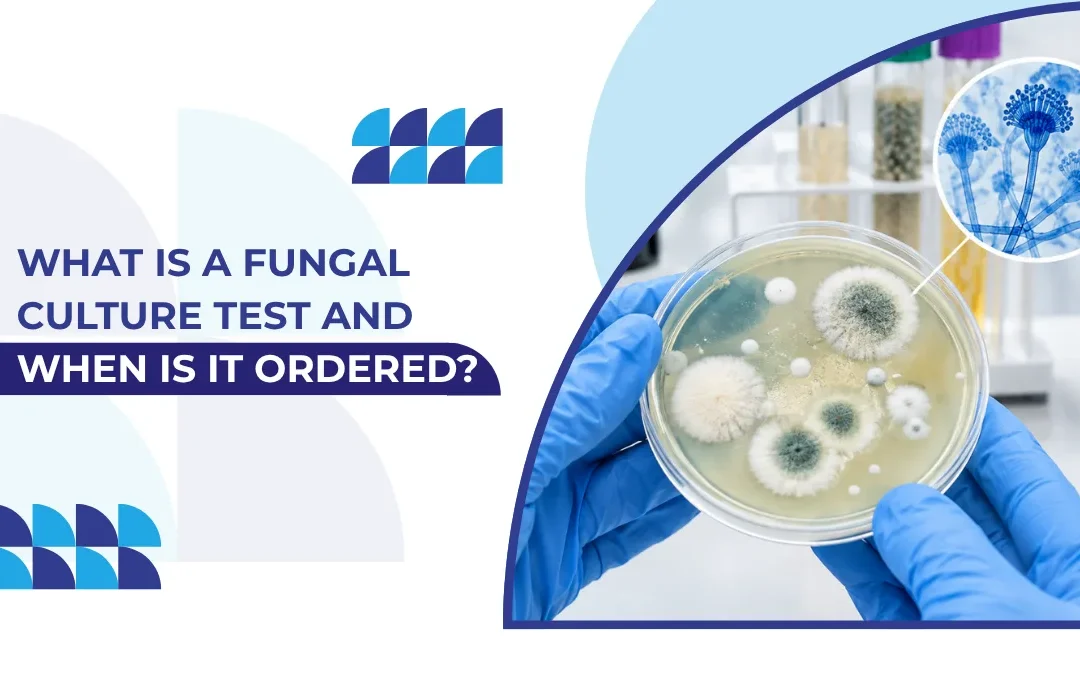
Some infections just won’t settle. A nail stays thick and yellow after months of cream, or a rash fades and then comes straight back. A fungal culture test is how a lab finds the cause. It grows any fungus from a small sample until it can be named.
According to the senior microbiologist at Echelon Hospital, a multi-specialty hospital in Navi Mumbai, “Fungi grow slowly, so a culture test can take days and sometimes a few weeks. That wait lets the lab identify the exact organism instead of guessing from how an infection looks. Two different fungi can cause an almost identical rash and still need different drugs.”
How Does a Fungal Culture Test Work?
The test has four stages and waiting is the longest of them. Bacteria can show up on a plate overnight, but fungi take their time.
Sample collection: Where the problem is decides what gets taken. Nails mean clippings and the scalp means hair and scrapings. A chest infection may need sputum.
Growth on special media: The sample goes onto a plate that fungi like. It stays warm for days and sometimes weeks.
Identification: The colour and texture of the colony give the first hints. Then the microscope settles it, whether yeast, mold or skin fungus.
Matching the treatment: Identifying the fungus helps doctors choose the right antifungal medication and reduces the risk of prolonged treatment with drugs that may not work.
Many labs run a quick direct smear alongside for early clues. Which sample suits which symptom is a routine call for the microbiology services team.
Wondering if a stubborn nail or skin infection could be fungal? Learn how a fungal culture test can help identify the cause.
When Is a Fungal Culture Test Ordered?
Not every rash needs a culture. It comes up when the cause is unclear or when treatment hasn’t worked.
Stubborn skin or nail changes: Thick, yellow, crumbly nails are the classic case. Itchy ring-shaped patches that keep coming back fit too.
Scalp and hair problems: Scaly bald patches in a child often turn out to be ringworm of the scalp. Confirming it first is sensible because the treatment is a long one.
Weak immunity: Chemotherapy, long steroid courses, diabetes or HIV can let deeper fungal infections in. Those need to be identified quickly.
Lung or bloodstream concerns: A lingering cough with odd chest imaging may prompt testing. A fever that stays on despite antibiotics is a reason to investigate.
Bacterial infections follow the same logic, where the organism is grown before treatment is picked. The urine culture and sensitivity test is a good example of that.
How Are Fungal Culture Test Results Read?
Growth is slow, so reports often come in parts. An early note may say “no growth so far” and the final one follows later.
No growth: Nothing grew by the end of the incubation period. If symptoms carry on, a repeat sample may be taken, since fungi don’t always grow well in a lab.
Positive growth: A fungus was found and named. The species decides which treatment makes sense.
Mixed or contaminated growth: Harmless spores from the air or skin sometimes land on the plate. The sample site helps judge whether the finding matters.
Susceptibility testing: Serious infections may get an extra check on which antifungals work. Most skin and nail cases skip it.
A culture result never stands alone. The clinical laboratory report gets read with the symptoms and any other findings.
Key Takeaways: A fungal culture test identifies the fungus behind an infection, so treatment can be chosen with more certainty. It is mostly ordered for stubborn, recurring or deep infections. Results take days to weeks, and a negative report doesn’t always rule an infection out.
FAQ
How long does a fungal culture test take?
Yeasts may grow within 2 to 5 days. Molds and skin fungi can need up to 4 weeks.
Do you need to prepare for a fungal culture test?
Very little. Skip antifungal cream on the area before sampling unless advised otherwise.
Is a fungal culture the same as a KOH test?
No. A KOH test is a quick look under the microscope. A culture grows the fungus and identifies it.
Can a fungal culture be negative even with an infection?
Yes. Fungi can be slow or fussy in a lab, so a repeat sample is sometimes needed.
References
-
CDC, Fungal Diagnostic Testing: https://www.cdc.gov/fungal/diagnosis/index.html
MedlinePlus, Fungal Tests: https://medlineplus.gov/lab-tests/fungal-tests
Disclaimer: This blog is for educational and informational purposes only and should not be considered professional advice.