
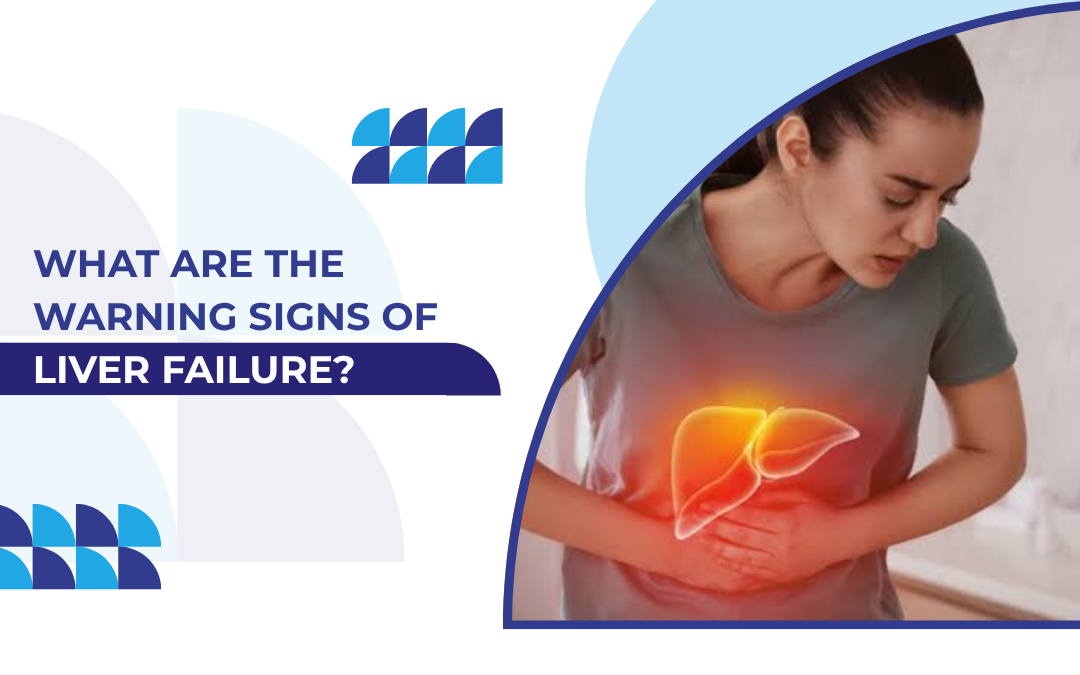
Liver failure develops when enough liver tissue is damaged that the organ can no longer filter toxins, produce clotting proteins, or regulate the body’s metabolism and the warning signs, when they do appear, reflect exactly those lost functions.
According to the Gastroenterologist at Echelon Hospital, a multispecialty hospital in Kopar Khairane, “The liver is one of the most forgiving organs in the body. It compensates silently for a long time, which is precisely why patients arrive late. The signs are there they’re just easy to explain away until they’re not.”
What Are the Early and Late Warning Signs of Liver Failure?
Some of these signs appear early. Others only show up once the damage is already extensive. Either way, none of them should be waited out.
- Yellowing of the skin or the whites of the eyes is usually the first visible sign. It happens because the liver can no longer process bilirubin the waste product from old red blood cells. At first it’s subtle, easiest to spot in the eyes under natural light. By the time the skin turns visibly yellow, bilirubin levels are already significantly elevated.
- Fatigue that sleep doesn’t fix, combined with a genuine loss of appetite, are early signs that get dismissed constantly. Patients put them down to stress, overwork, or a slow virus. What’s actually happening is that toxins are building in the bloodstream because the liver isn’t clearing them. The tiredness is different heavier, more persistent, and it keeps getting worse.
- Swelling across the abdomen, particularly fluid accumulation rather than just bloating, is a sign the liver has stopped producing enough albumin to maintain normal fluid balance. This is called ascites. It can develop gradually over weeks or appear more suddenly in decompensated cirrhosis.
- Confusion, slowed thinking, and personality changes point to hepatic encephalopathy. Ammonia and other toxins that a healthy liver neutralises start accumulating in the blood and cross into the brain. Mild cases look like forgetfulness or irritability. Advanced cases progress to disorientation and loss of consciousness. This is a medical emergency.
People with this combination of symptoms shouldn’t wait for a scheduled check-up. The gastroenterology treatment team at Echelon Hospital can assess liver function urgently.
Concerned about jaundice, persistent fatigue, or abdominal swelling?
What Causes Liver Failure and When Does It Become an Emergency?
Liver failure rarely develops overnight. It’s usually the result of an underlying cause that has been active for years, and certain symptoms, when they appear together, signal that the situation needs immediate hospital attention, not a routine appointment next week.
- Alcohol-related liver disease and chronic viral hepatitis B and C are still the two most common routes to cirrhosis and eventual failure in India. Both destroy liver cells slowly, replacing them with scar tissue that can’t perform the liver’s functions. The insidious part is that neither causes obvious symptoms for years which is why regular liver function testing matters if you drink heavily or have hepatitis risk factors.
- Non-alcoholic fatty liver disease has quietly become one of the most common liver conditions in India, driven by rising rates of obesity, Type 2 diabetes, and metabolic syndrome. Many patients find out they have it incidentally on an ultrasound done for something else. It doesn’t stay benign if ignored fatty liver progresses to inflammation, then fibrosis, then potentially cirrhosis. Anyone managing high blood pressure alongside obesity or blood sugar problems carries compounding risk and needs their liver monitored alongside their cardiovascular health.
- Acute liver failure is a different scenario entirely. It develops over days or weeks, not years, and is usually triggered by paracetamol overdose, acute viral hepatitis, drug reactions, or autoimmune disease. Sudden severe nausea, rapid-onset jaundice, and confusion in someone with no known liver history is an emergency not a reason to book a routine appointment for next month.
- Unexplained bleeding or bruising that doesn’t fit the injury, dark urine, pale stools, and a visibly distended abdomen together in one patient add up to advanced liver failure. The liver has stopped making clotting proteins and can no longer regulate fluid. That combination needs urgent assessment, not watchful waiting.
When liver disease is caught before failure sets in, management is medical. When it isn’t, the conversation becomes about transplantation.
Why Choose Echelon Hospital for Gastroenterology Care in Kopar Khairane
Echelon Hospital is a NABH pre-accredited multispecialty hospital in Kopar Khairane, Navi Mumbai. The gastroenterology department manages the full range of liver conditions hepatitis, cirrhosis, fatty liver disease, and acute liver failure supported by endoscopy, in-house imaging, and a liver transplant programme for patients with end-stage disease. Everything from initial diagnosis to surgical intervention is available within one facility.
FAQ
Can liver failure be reversed?
Acute liver failure caught early may be reversible; chronic liver failure from cirrhosis generally isn’t, though progression can be slowed significantly with the right treatment.
What does liver failure feel like in the early stages?
Persistent fatigue that doesn’t improve with rest, mild nausea, reduced appetite, and slight yellowing of the eyes all easy to dismiss, which is why many patients present late.
Is jaundice always a sign of liver failure?
Not always, but persistent or worsening jaundice alongside fatigue or abdominal symptoms should always prompt urgent liver function tests.
How quickly can liver failure develop?
Acute liver failure develops over days to weeks; chronic liver failure accumulates over years as scar tissue replaces functional liver cells.
References:
- Liver Disease — National Institute of Diabetes and Digestive and Kidney Diseases (NIDDK): https://www.niddk.nih.gov/health-information/liver-disease
- Liver Failure Overview — MedlinePlus, National Library of Medicine: https://medlineplus.gov/liverdiseases.html
Disclaimer: This blog is for educational purposes only and is not a substitute for professional medical advice. Please consult a qualified doctor for guidance specific to your case.