
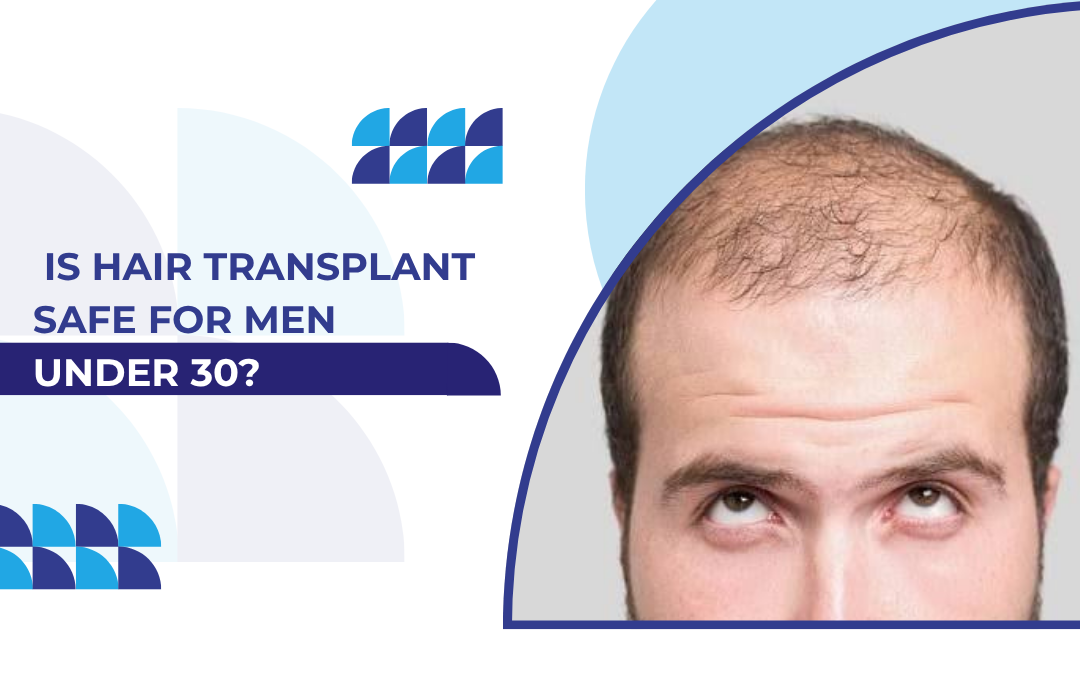
Hair transplant surgery is generally safe for men under 30. However, being safe does not always mean it is the right time for the procedure. Techniques such as FUE and FUT have a low risk of complications regardless of age. The main consideration is that hair loss in younger men is often still progressing and may not have stabilized. If a transplant is performed too early, the surrounding natural hair may continue to thin over time, which can affect the overall appearance and increase the likelihood of needing additional procedures in the future.
According to a senior plastic surgeon at Echelon Hospital, a super speciality hospital in Navi Mumbai, “We don’t turn young patients away, but we do take a more cautious approach with them. A hairline that’s still receding needs a different plan than one that’s already stable, and rushing that decision rarely serves the patient well. “
What Makes Hair Transplant Different for Younger Men?
Age itself isn’t the real issue here, honestly. It’s what’s actually happening to the hairline underneath.
Progressive loss complicates timing more than anything else. If the hairline’s still receding, transplanted hair can end up looking patchy within a few years, surrounded by more loss.
Donor supply matters long-term, too. Younger patients have decades ahead of them, so surgeons plan conservatively, saving donor hair for future sessions rather than using it all at once.
Emotional urgency plays a role, unfortunately more than it should. Hair loss at 24 hits differently than at 50, and that urgency sometimes pushes people toward surgery before it’s actually the right time.
Medical stabilization usually comes first. Medications like finasteride or minoxidil often get tried for six to twelve months, just to see if the loss slows down on its own.
A proper scalp evaluation before anything else gets decided is really where this whole process should start.
When Should a Young Man Actually Consider the Surgery?
When Should a Young Man Actually Consider the Surgery?
While some young men may benefit from waiting, that is not the case for everyone. In certain situations, men under 30 can be suitable candidates for a hair transplant after a thorough evaluation by a specialist.
- Stable hair loss: If hair loss has remained stable for one to two years, even in the mid-to-late twenties, a hair transplant may be a suitable option.
- Family history: A predictable pattern of hair loss based on family history can help specialists estimate how hair loss may progress over time.
- Healthy donor area: Having a sufficient amount of healthy hair at the back and sides of the scalp is essential for achieving natural-looking, long-lasting results.
- Realistic expectations: A hair transplant improves the appearance of hair loss but does not stop future hair thinning. Patients should understand that ongoing hair loss may require additional treatment or procedures.
- Scalp health: Healthy scalp and skin conditions are important for proper healing and successful results. In some cases, underlying scalp conditions may need to be treated before surgery is recommended.
Why Choose Echelon Hospital
The plastic surgery team at Echelon Hospital works alongside dermatology, so hair loss gets evaluated properly, not just treated as a straightforward surgical fix.
The surgeons bring years of hands-on experience with both FUE and FUT techniques, staying current with the latest advances in hair restoration to give patients outcomes that hold up over time.
📞 Call +91 8989585050 to book your consultation.
FAQ
Is hair transplant surgery painful?
Not really, it’s done under local anesthesia, so patients feel pressure more than actual pain.
How soon do results show after surgery?
New growth usually starts around three to four months, with fuller results by a year.
Can hair loss continue after a transplant?
Yes, surrounding native hair can keep thinning unless it’s also treated or monitored.
Is one session usually enough?
Not always, some patients need a second session later as their hair loss pattern evolves.
References
- Hair Loss — MedlinePlus, NIH: https://medlineplus.gov/hairloss.html
- Hair Transplant — MedlinePlus, NIH: https://medlineplus.gov/ency/article/007205.htm
Disclaimer: This blog is for general awareness only and does not replace professional medical consultation.