
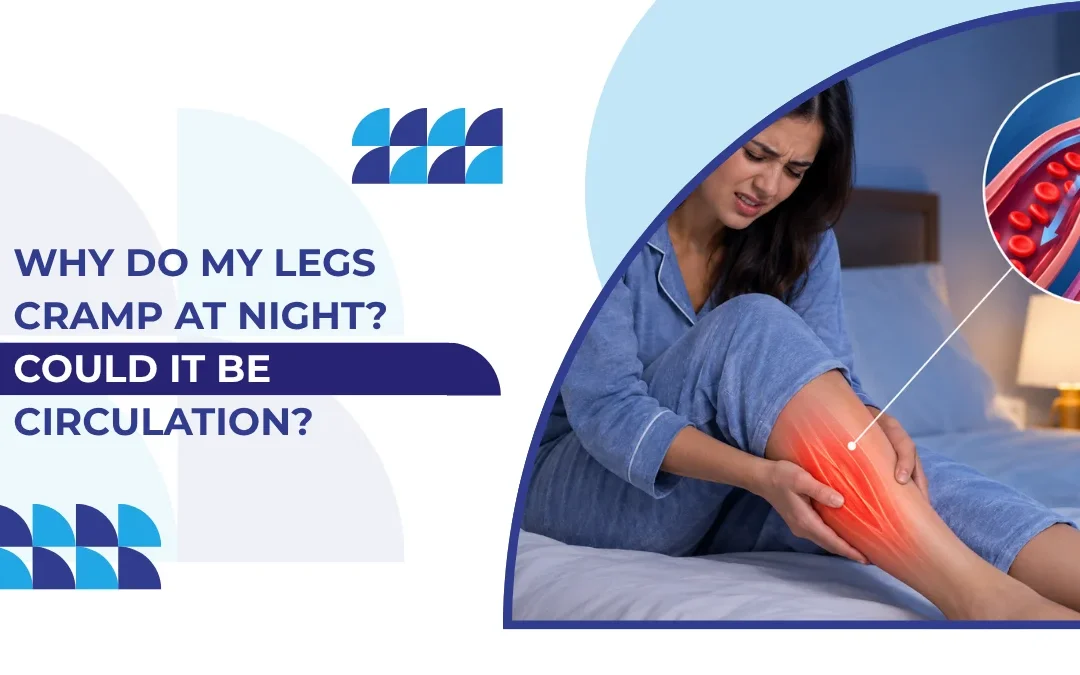
Yes, poor blood flow can do it. But if your calf grabs at 2 a.m., circulation is usually not the first thing a doctor looks at. Before you decide that leg cramps and poor circulation are tied together in your case, it’s worth going through the likelier causes.
According to a consultant at Echelon Hospital, a multispecialty hospital in Navi Mumbai, “Most night cramps come from tired muscles or low fluid levels and settle on their own. The pattern is what matters. Cramps that arrive with cold feet, colour changes or pain on walking deserve a proper check.”
Can Poor Blood Flow Cause Cramps in the Legs?
A calf that gets too little blood starts to ache and then clenches. Most people feel it there first, and it tends to happen in bed.
- Narrowed arteries: over many years, fat can collect on the artery walls and narrow the channel. The calf then gets less blood than it wants, which can hurt even at rest. A few people say hanging the leg off the bed takes the edge off.
- Weak leg veins: valves in the leg veins can wear out and let blood slide back down. It settles around the ankles, so they swell as the day goes on, and the cramps tend to arrive once you’re lying down.
- Skin and foot changes: feet that feel cold or look pale are the first thing to notice. Shiny skin. Shins with no hair. Sores that take weeks to heal. Any of these suggests the blood supply is poor, especially if your calf also hurts on a walk and the ache goes when you stop.
- A clot in one leg: one leg that’s swollen, warm and painful is not something to wait out. Get it seen the same day.
A Doppler test is the usual way to see how blood moves through the leg vessels. It uses sound waves and needs no incision.
Another night cut short by a cramp? If it keeps happening, get it evaluated.
What Else Can Cause Leg Cramps at Night?
Usually it’s something much less dramatic. Ask yourself how long you were on your feet, how much you drank, and whether a doctor changed any of your tablets lately.
- Overworked muscles: a shift spent standing, a hard gym session, or eight hours at a desk can leave your calves tight by bedtime. A lot of people also sleep with their feet pointing down, and that holds the calf in a shortened position all night.
- Low fluids or minerals: if you haven’t had enough water, or your potassium, magnesium or calcium is on the low side, muscles get irritable. A hot, sweaty day can be enough.
- Medicines: some water tablets, statins and blood pressure pills are known to cause cramps. Don’t stop them on your own. Your doctor can look at it at the next review.
- Nerves and blood sugar: a pinched nerve in the lower back, or nerve damage from diabetes, can set cramps off as well. Tingling or burning in the feet usually goes with it.
If tingling feet come with the cramps, blood sugar is worth checking. Our post on the early symptoms of type 2 diabetes you should not ignore goes through what else to watch for.
What Helps With Night Cramps, and When Is It Time to See a Doctor?
Most cramps ease with a few changes at home. A few signs mean you should be seen instead.
- Stretch before bed: stand an arm’s length from a wall, lean in and keep both heels on the floor. Stay there for 20 to 30 seconds per leg, and repeat it each night for a week to see whether it makes a difference.
- Drink water, then walk: sip through the day instead of gulping a big glass at bedtime, and walk for ten minutes after dinner. Legs that have been folded under a desk all day tend to seize up.
- When one strikes: straighten the leg and pull your toes back towards your shin. Kneading the calf lightly, or holding something warm against it, usually brings relief.
- When to book a visit: go if cramps hit most nights, if a leg is swollen, or if you see colour changes, weakness or a foot sore.
If the pain won’t settle, visiting a bone and joint hospital near me for specialised Orthopedic care can help determine whether the discomfort stems from the muscles, joints or nerves in the spine.
Key Takeaways: Most night cramps are harmless and very common. Poor circulation is only one possible cause, so keep an eye out for cold feet, skin changes and calf pain when you walk. Drinking enough, stretching and a short evening walk help a lot of people, but a swollen leg or cramps that keep returning need a doctor.
FAQ
Do night leg cramps point to poor circulation?
Now and then, though not often. Tired muscles and low fluids are the usual cause. Cold feet or sores that won’t heal make circulation more likely.
How long does a night leg cramp last?
Most pass within a few minutes, and some are over in seconds. Expect the calf to feel bruised for a day afterwards.
Does dehydration cause night leg cramps?
Yes. Low water or low mineral levels make muscles more likely to seize up.
When do leg cramps need a doctor’s visit?
When they come often, when one leg swells, or when you notice colour changes, weakness or a sore on the foot.
References
-
Mayo Clinic, Night Leg Cramps: https://www.mayoclinic.org/symptoms/night-leg-cramps/basics/causes/sym-20050813
-
National Health Service (NHS), Peripheral Arterial Disease: https://www.nhs.uk/conditions/peripheral-arterial-disease-pad/
Disclaimer: This blog is for educational and informational purposes only and should not be considered professional advice.