
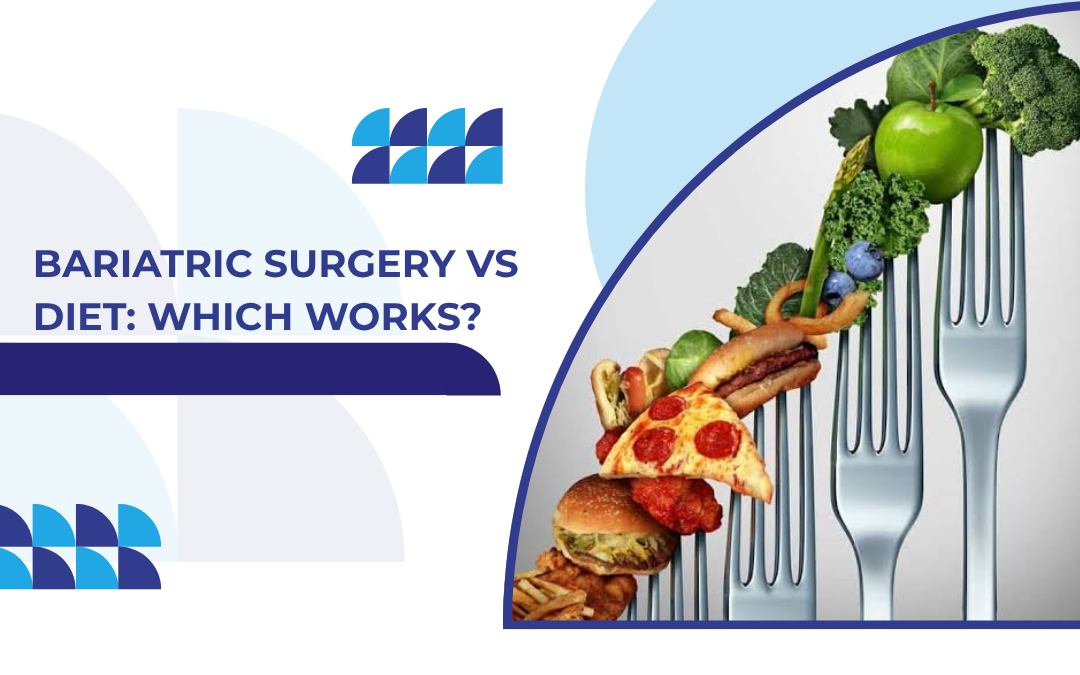
Diet and exercise work. Nobody’s saying they don’t. But for people with severe obesity, they often don’t work long enough, or well enough, on their own. Bariatric surgery, on the other hand, changes the digestive system itself, so the results tend to stick around longer. Studies actually show something interesting here. Patients who have surgery keep off a good chunk of that weight even five years later. Diet and exercise alone, for someone with a BMI over 35 or so, rarely produces that same lasting drop. It’s not that lifestyle changes fail. It’s that biology sometimes needs more help than willpower can give it.
According to the senior bariatric surgeon at Echelon Hospital, a super speciality hospital in Navi Mumbai, “Diet and exercise should always come first, that’s not in question. But once someone’s tried everything and the weight keeps coming back, surgery isn’t giving up, it’s just being realistic about what the body’s actually dealing with.”
How Do the Two Actually Compare Long-Term?
They’re not really competing on the same terms, honestly. One reshapes the body’s chemistry. The other relies on habits holding.
Weight regain. Diet-only patients regain a lot, most of it actually, within a few years. Surgery patients regain some too, but far less.
Hormonal shift happens after surgery in a way dieting just can’t replicate. Hunger hormones drop. That’s part of why the weight stays off.
Effort required doesn’t disappear with surgery, though, people assume it does. Eating habits still matter. Surgery just gives the body a head start.
Health conditions tied to weight, diabetes, high blood pressure, sleep apnea, tend to improve faster and more completely after surgery than with lifestyle changes alone.
A lot of this comes down to how the digestive system responds differently once its structure’s actually been changed, not just its inputs.
Wondering which option fits your weight loss goals?
When Does Surgery Actually Make More Sense Than Lifestyle Changes?
Not everyone needs surgery. That’s worth saying clearly. But for some people, it stops being optional.
BMI thresholds. Above 40, or above 35 with a condition like diabetes attached, surgery usually gets recommended over continued dieting.
Repeated failure. Years of diets, programs, medications, all tried, none holding. At some point that pattern itself becomes the diagnosis.
Obesity-related disease. Sleep apnea, joint damage, fatty liver, conditions that keep getting worse, not better, despite genuine effort.
Quality of life matters too, more than people give it credit for. Mobility, energy, the ability to just live without constant strain, these count.
Quality of life matters too, more than people give it credit for. Mobility, energy, and the ability to live without constant physical strain all matter when deciding the right treatment. If you’re unsure whether surgery is the right option, learn more about our guide on bariatric surgery eligibility.
Why Choose Echelon Hospital
The bariatric team at Echelon Hospital works alongside gastroenterology and general surgery, so the whole picture, not just the weight number, gets looked at properly. Every patient goes through a detailed pre-surgical evaluation covering metabolic health, existing conditions like diabetes or sleep apnea, and psychological readiness before any procedure is planned.
Post-surgery care doesn’t stop at discharge either. Nutrition counselling, regular follow-ups, and monitoring for conditions tied to weight are built into the recovery plan, so the results have the best chance of holding long-term.
📞 Call +91 8989585050 to book your consultation.
FAQ
Is bariatric surgery only for extreme obesity?
Mostly, yes, it’s usually considered for BMI over 40, or 35 with related health issues.
Can weight come back after bariatric surgery?
Some regain happens, but usually far less than with diet and exercise alone.
Does bariatric surgery replace healthy eating habits?
No, it supports them. Good habits still matter after surgery, just differently.
How soon do health improvements show after surgery?
Conditions like diabetes and blood pressure often improve within months, sometimes faster.
References
- Weight-loss (Metabolic & Bariatric) Surgery — NIDDK, NIH: https://www.niddk.nih.gov/health-information/weight-management/bariatric-surgery
- Long-term Study of Bariatric Surgery for Obesity (LABS) — NIDDK, NIH: https://www.niddk.nih.gov/about-niddk/research-areas/obesity/longitudinal-assessment-bariatric-surgery
Disclaimer: This blog is for general awareness only and does not replace professional medical consultation.