
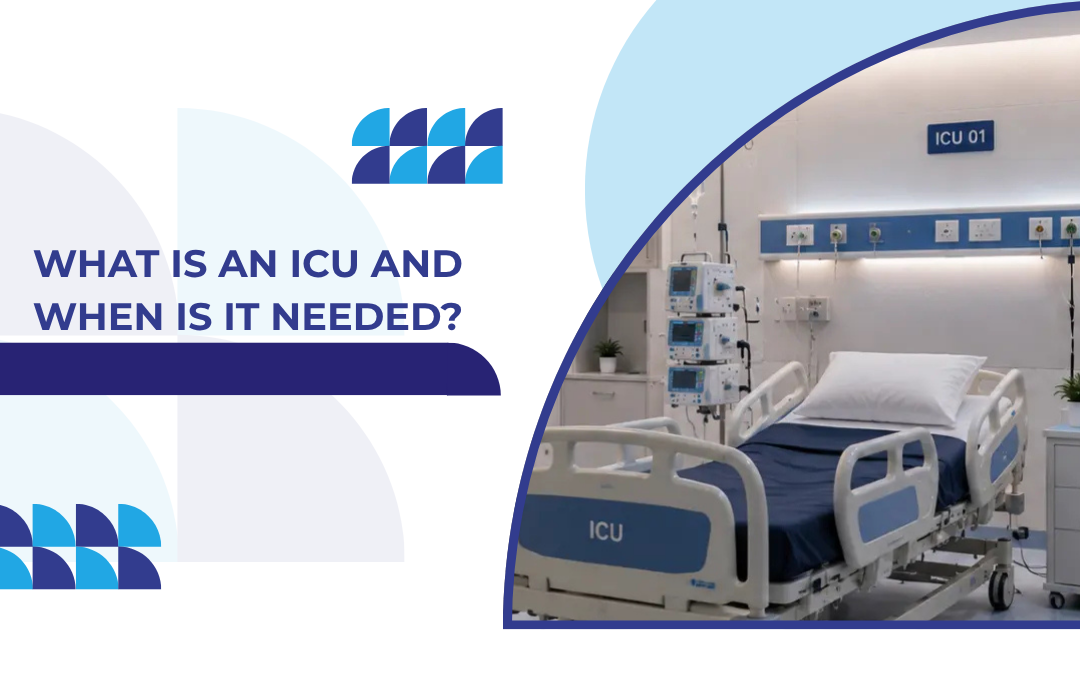
An ICU, or intensive care unit, is where hospitals put patients who need very close watching. Not the usual “check in every few hours” kind of care. One nurse handles maybe one or two patients here, not a whole ward. And the equipment is different too, ventilators for breathing, heart monitors, IV pumps, things a regular room just doesn’t have lying around. Patients end up here when an organ, the lungs, the kidneys, sometimes the heart, needs real help just to keep going. Bad infections, major surgery, a bad accident, breathing that’s suddenly gotten worse. That’s usually what it takes.
According to a senior intensivist at Echelon Hospital, a super speciality hospital in Navi Mumbai, “Families often think ICU means the worst has already happened. Most of the time it just means we’re watching closer, not that we’ve given up on anything.”
How Does an ICU Actually Work?
It’s not just a room with extra machines. It’s a completely different level of watching someone.
Nurse ratio. One nurse, one or two patients. That’s it. Try comparing that to a normal ward .
Vital monitoring never really stops here. Heart rate, oxygen, blood pressure, breathing, all of it running constantly instead of getting checked every couple hours.
Life support fills in the gaps the body can’t handle alone anymore. Can’t breathe well enough? A ventilator takes over. Kidneys struggling? Dialysis steps in. Medicines get timed and dosed through IV pumps.
Round-the-clock team, and this is important: the doctors and nurses are actually there. All night. Not reachable by phone from somewhere else. There.
Heart problems send a lot of people into the ICU, more than people expect. That’s basically why cardiac care and the ICU team end up working side by side so often.
Worried a loved one’s condition might need ICU-level care?
When Is a Patient Actually Shifted to the ICU?
Not every serious illness needs an ICU bed, honestly. What matters is how unstable things are right now, not how the diagnosis sounds.
Organ failure. Kidneys, lungs, liver, one giving out or several at once. At that point there’s not much choice left.
Septic shock is different but ends up in the same place. A bad infection tanks blood pressure fast, and that needs monitoring most regular wards aren’t set up for.
Post-surgery risk, especially after heart or brain surgery. Even when everything went fine, patients often spend a day or two here anyway. Just to be safe.
Trauma severity moves fast. Head injuries, heavy bleeding, several fractures at once. These get sent to the ICU almost immediately, before anyone’s even finished assessing everything.
Heart surgery patients almost always spend that first recovery day here. An echocardiography test is usually part of why the heart still gets watched this closely, even once the surgery’s done and over with.
Why Choose Echelon Hospital
There’s a fully equipped ICU at Echelon Hospital, working right alongside the critical care team, and everything stays under one roof so care doesn’t get split across departments when it matters most.
Whether it’s organ failure, septic shock, major trauma, or the first recovery day after cardiac or brain surgery, ICU care works best when the critical care team is already in place and coordinated, not assembled after the emergency starts.
📞Call +91 8989585050 to book your consultation.
FAQ
How long do patients usually stay in the ICU?
Depends on the condition, really. A day or two for some, weeks for others.
Can family members visit ICU patients?
Yes, though visiting hours are usually limited so the patient can rest and recover.
Is ICU care always for critical illness?
Mostly, yes. Though some post-surgery stays are just precaution, not an emergency.
Does ICU mean a ventilator is needed?
Not always. Plenty of patients are just monitored closely, nothing more than that.
References
- Critical Care — MedlinePlus: https://medlineplus.gov/criticalcare.html
- Intensive Care Unit (ICU) — MedlinePlus: https://medlineplus.gov/ency/imagepages/19957.htm
Disclaimer: This blog is for general awareness only and does not replace professional medical consultation.