
A sudden twist on the football ground. A misstep while climbing stairs. A fall during a morning jog. Joint injuries can happen to anyone and when they do, the pain, swelling, and loss of movement that follow can feel overwhelming.
If you have been diagnosed with a torn ligament, cartilage damage, or a persistent joint problem that has not responded to rest and medication, arthroscopy in Kopar Khairane at Echelon Hospital may be exactly the solution you have been looking for.
This article explains what arthroscopy is, which conditions it treats, what to expect during the procedure, and why it is now the preferred choice for joint surgery across the world.
What Is Arthroscopy?
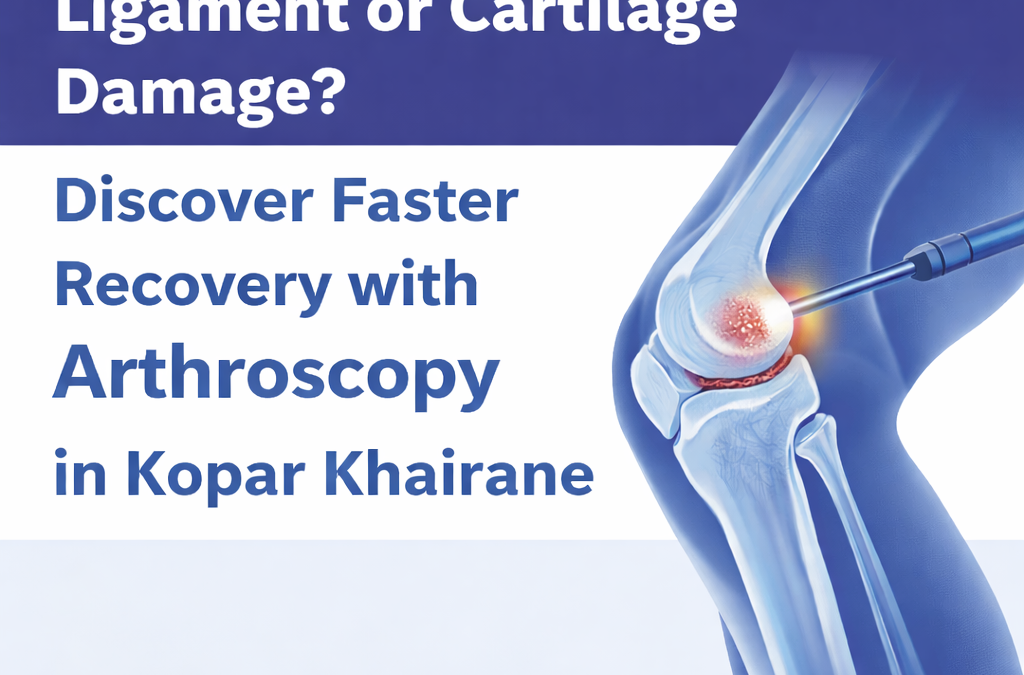
Arthroscopy is a minimally invasive surgical procedure used to diagnose and treat problems inside a joint. Instead of making large cuts, the surgeon inserts a tiny camera called an arthroscope through a small incision — no bigger than a keyhole. The camera projects a live, magnified image of the inside of the joint onto a screen, allowing the surgeon to see, diagnose, and correct problems with remarkable precision.
Small specialised instruments are inserted through one or two additional tiny incisions to carry out the repair. The entire procedure typically takes between 30 minutes and 2 hours, depending on the complexity of the condition.
Arthroscopy in Kopar Khairane at Echelon Hospital is performed by experienced orthopaedic surgeons using state-of-the-art equipment, making it one of the most trusted destinations for joint care in Navi Mumbai.
Which Joints Can Be Treated with Arthroscopy?
Arthroscopy is most commonly used for the knee and shoulder, but it can also be performed on the hip, ankle, wrist, and elbow. At Echelon Hospital, our arthroscopy team treats a wide range of joint conditions across all these areas.
Knee: Torn ACL, PCL, meniscus tears, cartilage damage, loose bone fragments, knee cap problems
Shoulder: Rotator cuff tears, shoulder instability, frozen shoulder, labral tears, bone spurs
Hip: Labral tears, hip impingement, loose bodies inside the hip joint
Ankle: Ligament damage, cartilage injuries, ankle instability
Wrist: Ligament tears, ganglion cysts, wrist pain with no clear cause on X-ray
If you are experiencing persistent joint pain, swelling, clicking, locking, or a feeling of instability, arthroscopy in Kopar Khairane can help identify and fix the problem through a single procedure.
Common Conditions Treated with Arthroscopic Surgery
Torn ACL (Anterior Cruciate Ligament): One of the most common sports injuries, the ACL connects the thigh bone to the shin bone and provides stability to the knee. A torn ACL causes the knee to feel unstable or “give way.†Arthroscopic ACL reconstruction uses a graft to replace the torn ligament, restoring full stability and function.
Meniscus Tear: The meniscus is the C-shaped cartilage in the knee that acts as a shock absorber. A tear causes pain, swelling, and often a locking sensation. Depending on the type and location of the tear, arthroscopy can either repair the meniscus or remove the damaged portion.
Cartilage Damage (Chondral Injuries): Cartilage covers the ends of bones inside joints and has poor natural healing ability. When damaged through injury or wear it causes pain and can lead to arthritis if untreated. Arthroscopic techniques allow surgeons to smooth, repair, or stimulate new cartilage growth.
Rotator Cuff Tear: The rotator cuff is a group of four muscles and tendons that stabilise the shoulder. A tear — from injury or degeneration causes shoulder pain, weakness, and difficulty lifting the arm. Arthroscopic repair reattaches the torn tendon to the bone using tiny anchors.
Frozen Shoulder (Adhesive Capsulitis): When shoulder pain and stiffness become severe and do not respond to physiotherapy, arthroscopic release can cut through the tight scar tissue, restoring movement significantly faster than waiting for natural resolution.
Why Choose Arthroscopy Over Traditional Open Surgery?
This is one of the most common questions patients ask. The answer lies in outcomes and arthroscopy wins on almost every measure.
Smaller incisions just 2 to 3 cuts of 5 mm each, compared to large open wounds. Less blood loss and lower risk of infection. Significantly less post-operative pain. Shorter hospital stay most patients go home the same day or next morning. Faster return to daily activities and sports. Smaller scars with better cosmetic results. Lower risk of complications overall.
For patients seeking arthroscopy in Kopar Khairane, Echelon Hospital combines surgical precision with patient-focused care ensuring you recover faster and get back to the life you love.
What to Expect: Before, During, and After Arthroscopy
Before the Procedure: Your surgeon will review your symptoms, examine the joint, and study your MRI or X-ray reports. Pre-operative blood tests and fitness assessments are done to ensure you are ready for surgery. You will be advised to fast for a few hours beforehand and will be given instructions about medications to pause before the procedure.
During the Procedure: Arthroscopy is performed under general or regional anaesthesia depending on the joint being treated. The surgeon makes small keyhole incisions, inserts the arthroscope, and carefully repairs the damaged tissue. Most arthroscopic procedures at Echelon Hospital are completed within one to two hours.
After the Procedure: You will be moved to a recovery area and monitored for a few hours. For day-care procedures, most patients are ready to go home the same day. You will be given pain medication, wound care instructions, and a physiotherapy plan to follow at home.
Recovery Timeline After Arthroscopy
One of the biggest advantages of arthroscopy in Kopar Khairane is the significantly shorter recovery compared to open joint surgery. Here is what most patients can expect:
Day 1-3: Rest, ice, elevation, and pain medication. Light walking is encouraged for knee procedures.
Week 1-2: Wound healing, reduced swelling. Gentle range-of-motion exercises begin with physiotherapy guidance.
Week 3-6: Strengthening exercises progress. Most patients with sedentary jobs return to work within 2-4 weeks.
Month 2-3: Gradual return to sports and physical activities for simpler procedures like meniscus repair.
Month 4-6: Full return to competitive sport for ligament reconstructions such as ACL surgery.
Recovery speed depends on the type of procedure, your age, fitness level, and how consistently you follow your physiotherapy programme. Our rehabilitation team at Echelon Hospital provides personalised recovery plans to help every patient achieve the best possible outcome.
When Should You See a Doctor?
Many joint injuries are initially managed with rest, ice, and anti-inflammatory medication. However, it is time to consult an orthopaedic specialist if you experience joint pain lasting more than 2-3 weeks without improvement, swelling that returns repeatedly after activity, a feeling that the joint is giving way or is unstable, a locking or catching sensation inside the joint, significant loss of range of motion, or pain that prevents you from resuming normal activities or sport.
Early evaluation is key. Delaying treatment for torn ligaments or cartilage damage can lead to worsening joint instability and long-term arthritis. Arthroscopy in Kopar Khairane at Echelon Hospital allows our specialists to diagnose and treat many of these conditions in a single visit to the operating theatre avoiding the need for prolonged uncertainty or repeated consultations.
Arthroscopy at Echelon Hospital, Kopar Khairane
Echelon Hospital is Kopar Khairane’s first fully equipped multi-specialty hospital, and our Orthopedics and Sports Medicine department is one of the most advanced in Navi Mumbai. Our arthroscopy programme is led by experienced orthopaedic surgeons who specialise in keyhole joint surgery for both sports injuries and age-related joint conditions.
Patients trust Echelon Hospital for experienced arthroscopic surgeons with expertise in knee, shoulder, and hip procedures, advanced arthroscopy equipment with high-definition imaging, in-house MRI and diagnostics for accurate pre-surgical planning, a dedicated physiotherapy and rehabilitation programme, day-care arthroscopy in Kopar Khairane for eligible procedures, a 140-bedded air-conditioned facility centrally located in Kopar Khairane, and easy accessibility from Vashi, Airoli, Ghansoli, Turbhe, Nerul, and all of Navi Mumbai.
Final Thoughts
A torn ligament or cartilage damage does not have to mean months of pain, a long scar, or a slow recovery. With modern arthroscopic techniques, most joint conditions can be repaired through tiny incisions with less pain, less downtime, and better outcomes.
If you are living with persistent joint pain, instability, or a sports injury that has not healed on its own, do not wait. Arthroscopy in Kopar Khairane at Echelon Hospital offers you the expertise, technology, and personalised care needed to get you moving freely again sooner than you might expect.