Stroke recovery doesn’t move in a straight line. Rarely does. Post-stroke rehabilitation is the structured process built around helping survivors regain movement, speech, and the everyday abilities a stroke took from them, and it pairs medical care with therapy that shifts shape as recovery unfolds. Most of the brain’s rewiring happens early, within the first three months, when neuroplasticity peaks and progress tends to come fastest. Because of that, understanding the post-stroke rehabilitation timeline in advance helps families measure things by phase rather than by week, which is usually a far more accurate yardstick.
According to a senior neurologist at Echelon Hospital, “families often expect recovery to move in a straight line, and it rarely does. Progress comes in bursts, then plateaus, then bursts again. We see it constantly. Therapy started too late. Sessions skipped because progress felt slow. Families discouraged by a plateau that was actually normal. My honest take? Start rehabilitation early and stay consistent, even when the gains aren’t visible week to week. That consistency is what the brain responds to.”
What Happens During Post-Stroke Rehabilitation?
No fixed template exists here. A plan bends around whatever the stroke actually affected, and that differs a lot from patient to patient, sometimes wildly so.
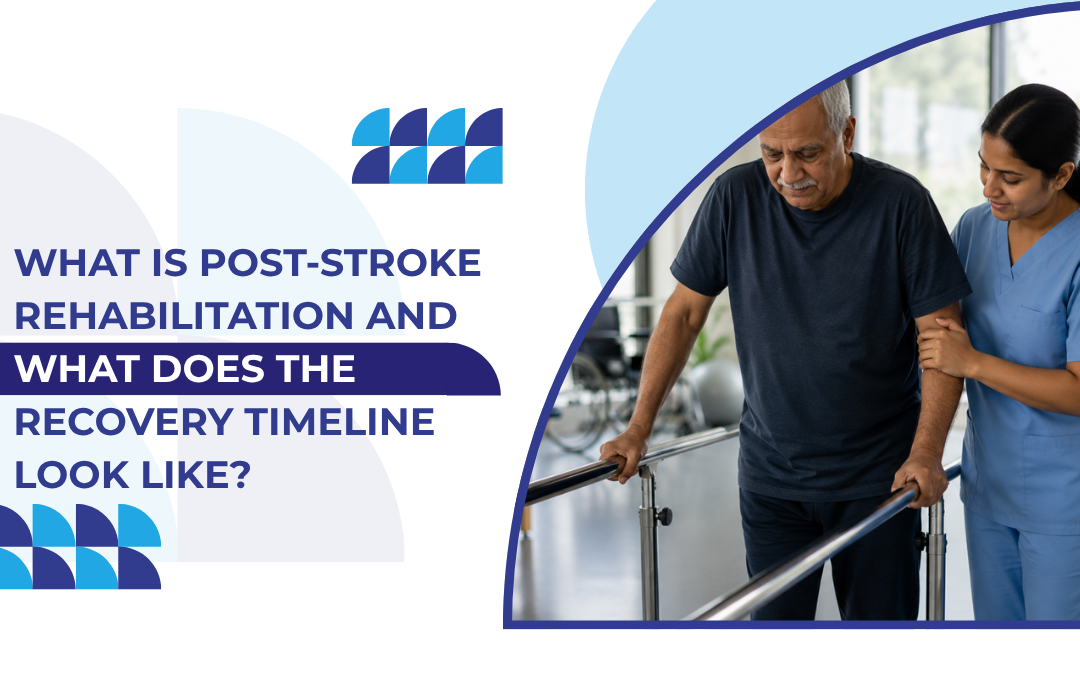
Physical therapy: rebuilds strength, balance, and coordination. Basic movements come first, walking and daily tasks come later.
Occupational therapy: targets the small stuff that adds up, dressing, eating, using the hands for fine motor work a stroke can quietly disrupt.
Speech therapy: addresses communication and swallowing difficulties, both common depending on which areas of the brain are affected.
Cognitive rehabilitation: memory, attention, problem solving. A stroke can hit thinking just as hard as movement. Sometimes harder.
Echelon Hospital has highly skilled physiotherapist in Navi Mumbai who can genuinely change the trajectory for patients working through physical recovery.
Supporting a loved one through stroke recovery?
What Does the Post-Stroke Rehabilitation Timeline Look Like?
Recovery unfolds in phases. Each one runs at its own pace, not a shared one, which is part of why comparisons between patients rarely hold up.
First 72 hours: medical stabilisation comes first, with gentle movement often starting as soon as it’s safe. Early mobilisation tends to improve outcomes down the line.
First three months: the fastest functional gains happen here, driven by peak neuroplasticity. This window is where intensive therapy pays off the most.
Three to six months: progress keeps going but eases off from that first stretch, and therapy pivots toward refining skills rather than building them from zero.
Six months and beyond: gains slow further, though continued therapy still helps plenty of patients regain more function, particularly with steady, consistent effort behind it.
Telling a stroke apart from related conditions matters just as much as what comes after. This related read on the difference between a stroke and a TIA explains how the two get distinguished early on.
Why Choose Echelon Hospital for Stroke Rehabilitation?
Echelon Hospital brings neurology and physiotherapy together under one roof. So stroke recovery doesn’t hinge on shuttling between separate facilities for medical follow up and therapy sessions. The rehabilitation team builds each program around what the stroke actually affected, not a generic template pulled off a shelf.
A predictable path is rare in stroke recovery. Therapy plans get reviewed regularly and adjusted as progress unfolds, not locked in from day one and left alone. Book your consultation today by calling +918989585050.
FAQ
How soon after a stroke should rehabilitation start?
Often within the first 72 hours, once the patient is medically stable.
When does recovery happen fastest?
Typically in the first three months, when the brain shows peak neuroplasticity.
Does recovery stop after six months?
No, gains continue for many patients, though more gradually than early on.
Is physiotherapy always needed after a stroke?
Most stroke survivors benefit from physiotherapy, though the extent depends on the case.
References
- American Stroke Association — Stroke Rehabilitation: https://www.stroke.org/en/life-after-stroke/stroke-rehab
- WHO — Stroke: https://www.who.int/news-room/fact-sheets/detail/stroke
Disclaimer: This article is for general awareness only and does not replace professional medical advice. Please consult a qualified neurologist or physiotherapist for guidance specific to your condition.