
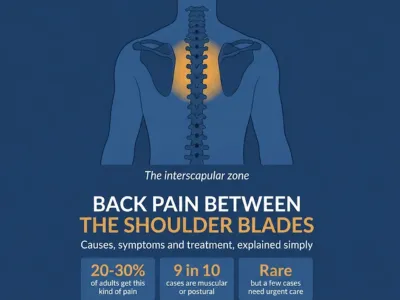
“Nine times out of ten, this pain is mechanical. Posture, muscle fatigue, or a cranky joint in the thoracic spine. Our job is catching the tenth case early, and that’s really the whole point of this guide.”
– Orthopaedics Team, Echelon Hospital, Navi Mumbai
Understanding Pain Between the Shoulder Blades
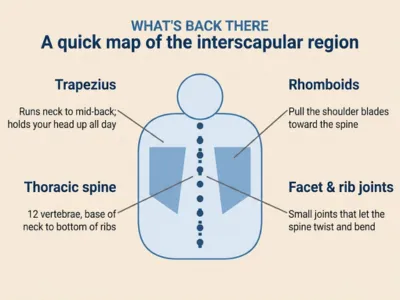
It’s a small patch of real estate doing a lot of work. Posture, lifting, reaching, breathing, it’s all routed through here. And unlike your neck or lower back, this region barely gets stretched in daily life. So when it’s overloaded or ignored for too long, it tends to speak up fast.
Tired of the pain that keeps coming back?
Echelon Hospital’s orthopaedic and physiotherapy team builds a plan around your back, not a generic printout. Explore orthopaedic care at Echelon Hospital
Common Causes of Pain Between the Shoulder Blades
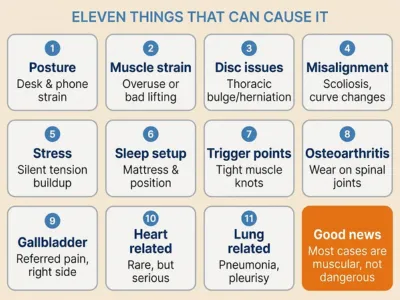
Pain between the shoulder blades can happen due to several reasons, ranging from posture-related strain to underlying health conditions.
- Poor posture: Long hours of desk work or phone use can strain upper back muscles and cause stiffness.
- Muscle strain or overuse: Heavy lifting, intense workouts, or repetitive movements can affect muscles like the trapezius and rhomboids.
- Disc problems: A bulging or herniated disc in the thoracic spine may irritate nerves, causing pain, numbness, or tingling.
- Spinal conditions: Scoliosis or spinal misalignment can create muscle imbalance and mid-back discomfort.
- Stress and muscle tension: Emotional stress can tighten shoulder and back muscles, leading to persistent aches.
- Sleeping posture: Poor sleeping positions or an unsuitable mattress can contribute to morning stiffness and pain.
- Trigger points: Tight muscle knots can cause localised pain and discomfort.
- Spinal arthritis: Age-related wear and tear of spinal joints may lead to stiffness and chronic pain.
- Referred pain: Gallbladder problems, heart conditions, or lung issues can sometimes cause pain felt between the shoulder blades.
While many cases are linked to muscles and posture, sudden or unexplained pain should be evaluated to rule out serious causes.
Symptoms That Often Accompany This Pain
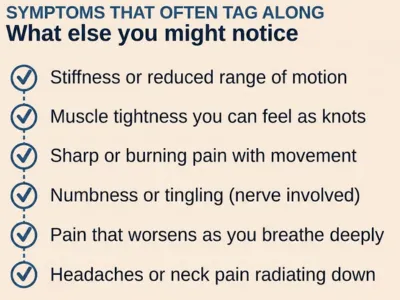
Depending on the cause, you might also notice:
- Stiffness or a reduced range of motion in your upper back and shoulders
- Muscle tightness or knots you can actually feel under your fingers
- Sharp or burning pain that flares up with certain movements
- Numbness or tingling, usually a sign a nerve is involved
- Pain that worsens when you breathe deeply, which can hint at a lung or heart cause
- Headaches or neck pain that seem to travel down from the base of the skull
Numbness running down an arm, or pain that shifts with your breathing? Pay attention to that combination. It’s not always serious, but it’s not something to just stretch away either.
Not sure if it’s your muscles or something bigger?
Echelon Hospital’s Emergency & Trauma Care and Cardiology teams are on call around the clock. Get it checked, not guessed.
When Is Pain Between the Shoulder Blades an Emergency?
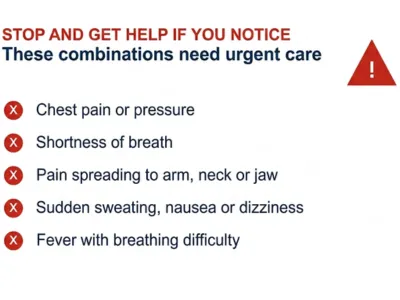
Most of this is safe to manage at home for a few days. A small list of symptoms changes that completely.
Get emergency help if the pain shows up with:
- Chest pain or pressure
- Shortness of breath
- Pain spreading to your arm, neck, or jaw
- Sudden sweating, nausea, or lightheadedness
Together, these can point to a cardiac event, and minutes matter. A fever alongside breathing trouble is its own red flag too, often pointing to a lung infection like pneumonia.
How Is the Cause Diagnosed?
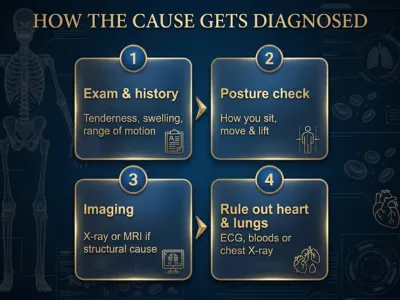
Diagnosis starts simple and only escalates if it needs to.
- A physical exam to check tenderness, swelling, and range of motion
- A look at your posture and how you move, sit, and lift
- Imaging, an X-ray or MRI, if a structural issue like a disc problem is suspected
- Ruling out cardiac or pulmonary causes through an ECG, blood tests, or a chest X-ray when red flags show up
Most people leave with a straightforward muscular or postural explanation. A smaller group needs the extra tests, and that’s precisely what this process is built to catch.
Ready for an actual answer instead of a guess?
Book a consultation with the orthopaedic team at Echelon Hospital and get it properly assessed. Book a consultation
How to Prevent Pain Between the Shoulder Blades
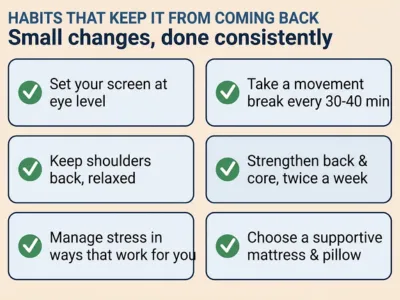
- Set your screen at eye level, elbows close to your body
- Take a short movement break every thirty to forty minutes
- Keep your shoulders back and relaxed, not hunched forward
- Strengthen your back and core a couple of times a week
- Manage stress in whatever way actually works for you, walking, breathing, a break from your desk
- Pick a mattress and pillow that keep your spine neutral overnight
None of this needs to be perfect. Small habits, done consistently, beat one big fix every time.
If it’s not improving, don’t just wait it out.
Echelon Hospital’s Emergency & Trauma Care unit and orthopaedic specialists offer diagnostics and treatment under one roof.
FAQ
What causes sudden pain between the shoulder blades?
Can bad posture really cause pain between the shoulder blades?
Is pain between the shoulder blades a sign of a heart problem?
How do I know if my shoulder blade pain is muscular or something more serious?
Can stress and anxiety cause pain between the shoulder blades?
What exercises help relieve pain between the shoulder blades?
Disclaimer This article is for general awareness only and does not replace professional medical advice. Please consult a qualified neurologist or physiotherapist for guidance specific to your condition.