
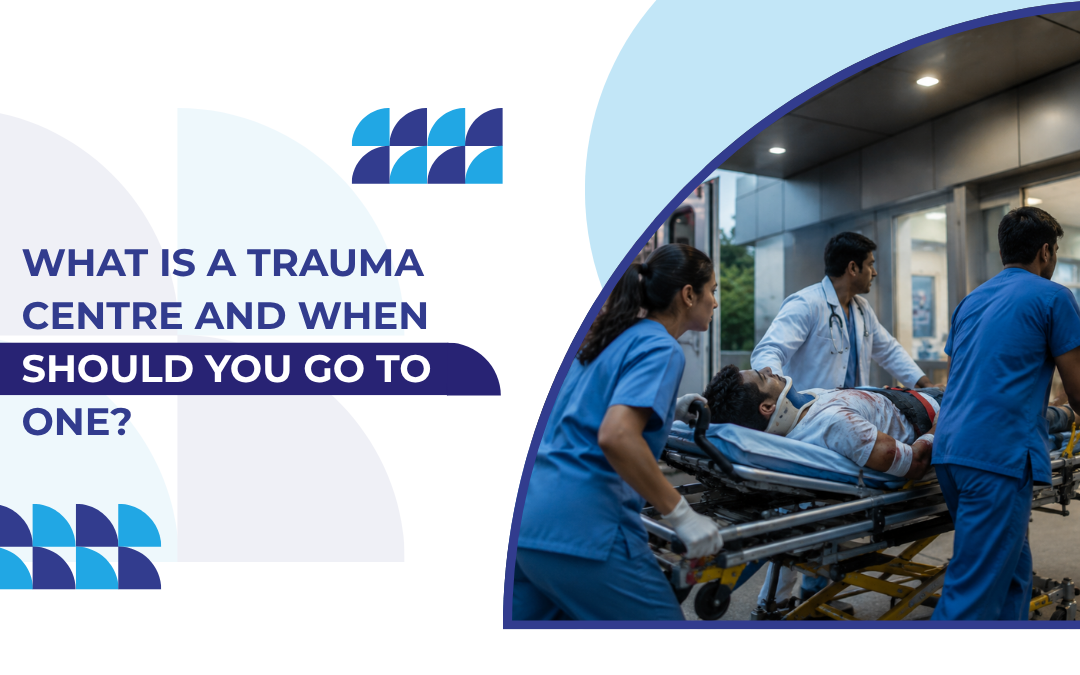
A trauma centre is a hospital unit built for severe, life-threatening injuries, the kind that can’t wait for a scheduled slot. Major road accidents. High falls. Gunshot or stab wounds. Crush injuries. It’s staffed and equipped 24/7 for exactly this, with surgeons, imaging, and operating rooms ready the moment a patient comes through the door. Because the first hour after a severe injury usually decides how the rest of the recovery goes, and that’s not something doctors say lightly.
According to the senior emergency medicine specialist at Echelon Hospital, a super speciality hospital in Navi Mumbai, “People sometimes drive an injured person to the nearest clinic instead of a trauma-equipped facility, and that delay can cost more than the extra ten minutes it would’ve taken to get to the right place. The first hour shapes everything that follows. That’s exactly why these units stay ready around the clock.”
What Does a Trauma Centre Actually Do?
It isn’t just a busier emergency room. It’s built around speed, and around coordination that doesn’t leave room for guesswork.
Round-the-clock readiness: Surgeons, anaesthetists, and OT staff stay on site at all hours. Not called in after the fact, not paged from home.
Rapid diagnostics: CT scans, X-rays, and blood work run within minutes of arrival, so internal bleeding or a hidden fracture doesn’t sit around unnoticed while everyone waits.
Surgery on standby, not on a waitlist. Operating rooms stay ready to go because plenty of trauma cases simply can’t wait for a booked slot. There’s no “come back next week” here.
More than one specialist, often at once: Orthopaedic, neuro, and general surgery teams frequently work the same case together, since serious injuries rarely stay contained to one system.
If there’s any doubt about how serious an injury is, that’s the moment to head toward critical care services.
Unsure if an injury is serious enough for a trauma centre?
When Should You Go to a Trauma Centre?
This is usually where people hesitate the longest. Understandably so, because nobody wants to overreact over what might turn out to be nothing.
Major road traffic accidents: Even without visible bleeding, high impact collisions can cause internal injuries that take hours to actually show themselves.
A fall from height changes the calculation fast. Roofs, ladders, staircases, all carry real risk of spinal or head injury, and that needs imaging, not a wait and watch approach at home.
Bleeding that won’t stop with pressure: That’s your signal to go. A first aid kit only goes so far.
Confusion or a blackout after a hit to the head. Go in immediately. Don’t wait to see how the next hour plays out.
Some trauma cases stabilise quickly in the emergency bay, while others need a longer stay under close monitoring. This related read on when a patient needs the ICU explains what that next stage of care actually looks like.
Why Choose Echelon Hospital for Trauma Care?
Echelon Hospital runs 24/7 emergency and trauma readiness as a core part of its infrastructure, not something bolted onto a general ward. Orthopaedic, neurosurgery, general surgery, and critical care teams work under one roof, which matters since most severe injuries don’t fit neatly into a single specialty.
But for families weighing where to go in the middle of an emergency, having every relevant team already on site removes one more decision from an already difficult moment. Call +91 8989585050 or the ambulance line +91 9326017389 to book your consultation.
FAQ
How do I know if an injury needs a trauma centre?
Heavy bleeding, blackout, suspected fracture, or high impact fall, go straight in.
Is a trauma centre the same as an ICU?
No. Trauma centres stabilise first; ICU care often follows.
Should I call an ambulance or drive myself?
Ambulance is safer for unstable or severe injuries.
Can a trauma centre handle multiple injuries at once?
Yes. Teams coordinate across specialties for exactly this.
References
- World Health Organization, Injuries and Violence Fact Sheet: https://www.who.int/news-room/fact-sheets/detail/injuries-and-violence
- American College of Surgeons, Trauma Center Levels Explained: https://www.facs.org/quality-programs/trauma/quality/verification-review-and-consultation-program/standards/
Disclaimer: This blog is for educational purposes only and is not a substitute for medical advice. If you or someone nearby has a severe injury, call for emergency help immediately.