
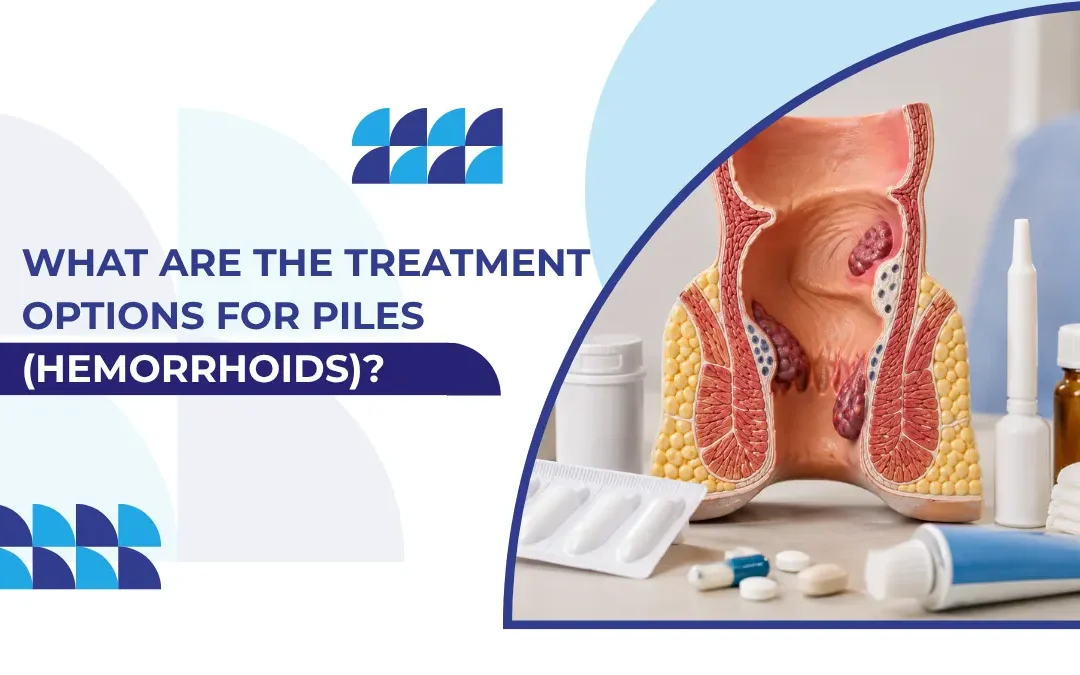
Treatment for piles usually begins well before surgery becomes a consideration. Most cases start with dietary changes and warm sitz baths, which are often sufficient for early grade piles. When home care doesn’t help, procedures like rubber band ligation become the next step, and surgery is reserved for advanced or recurring cases. The right approach depends on the grade of the condition rather than how long symptoms have lasted.
According to the senior gastroenterologist at Echelon Hospital, a super speciality hospital in Navi Mumbai, “Most patients assume piles require surgery. That’s rarely true. Dietary and lifestyle changes resolve a significant share of early stage piles. But persistent bleeding shouldn’t be dismissed as embarrassing, since delaying evaluation often allows a manageable condition to progress. The grade of the piles should guide the treatment decision, not the duration of symptoms.”
What Are the Treatment Options for Piles Without Surgery?
Early and midgrade piles rarely need surgical intervention. A few consistent measures often make the difference. Nothing complicated.
Fibre rich diet: Fruits, vegetables and whole grains soften stool and reduce the straining that aggravates piles. Results typically take a few weeks to show.
Warm sitz baths: Sitting in warm water for about ten minutes twice a day helps reduce swelling and discomfort. It’s a simple habit that’s often overlooked.
Rubber band ligation: For Grade II and select Grade III piles, this procedure cuts off blood supply at the base of the pile. It shrinks and falls away within a week or two, and most patients don’t need general anaesthesia.
Sclerotherapy and coagulation: Smaller piles may respond to an injected sclerosing solution or focused infrared heat. Both are performed in a single outpatient sitting with minimal downtime.
A proper grading examination determines which of these options applies. That evaluation is best carried out through digestive care specialists rather than self diagnosis.
Wondering which piles treatment option fits your case?
When Does Piles Treatment Move Beyond Home Care?
Certain signs indicate that conservative management has reached its limit.
Persistent bleeding: Bright red bleeding that continues despite several weeks of dietary change warrants clinical evaluation rather than continued observation.
Prolapse that doesn’t resolve: Grade III piles that require manual repositioning, and Grade IV piles that remain permanently prolapsed, generally need a procedural or surgical approach.
Thrombosed piles: A sudden, hard and painful lump may indicate a thrombosed pile, which typically requires urgent medical attention.
Recurrence after banding: When a pile returns after ligation, surgical removal through hemorrhoidectomy or stapled hemorrhoidopexy tends to be the more durable solution.
Piles symptoms can overlap with other digestive issues, which makes accurate diagnosis important. Reviewing this related read on bowel symptoms can help clarify whether further evaluation is needed. Worth a look either way.
Why Choose Echelon Hospital for Piles Treatment?
Echelon Hospital is a NABH pre accredited multispecialty hospital in Kopar Khairane, with a dedicated gastroenterology and general surgery team experienced in treating piles at every grade, from conservative management to surgical care. Patients searching for piles hospitals near me are usually looking for one clear answer: whether their case needs a procedure. It’s a common search, but many people still hesitate to book a visit. A straightforward assessment can determine what treatment, if any, is needed. Call +91 8989585050 to book a consultation.
FAQ
Can piles heal without any medical treatment?
Early stage piles can settle with fibre and fluids, but ignoring bleeding isn’t wise.
Is rubber band ligation painful?
Most patients feel mild discomfort or pressure rather than sharp pain during banding.
Is surgery always required for piles?
No, most Grade I and Grade II cases respond to non operative care first.
How long does recovery take after treatment?
Two to three weeks for surgery, though banding recovery is usually much quicker.
References
- NIDDK, National Institute of Diabetes and Digestive and Kidney Diseases, Hemorrhoids: https://www.niddk.nih.gov/health-information/digestive-diseases/hemorrhoids
- NHS, Piles (Haemorrhoids): https://www.nhs.uk/conditions/piles-haemorrhoids/
Disclaimer: This blog is for educational purposes only and does not constitute medical advice. Please consult a doctor for diagnosis and treatment.