
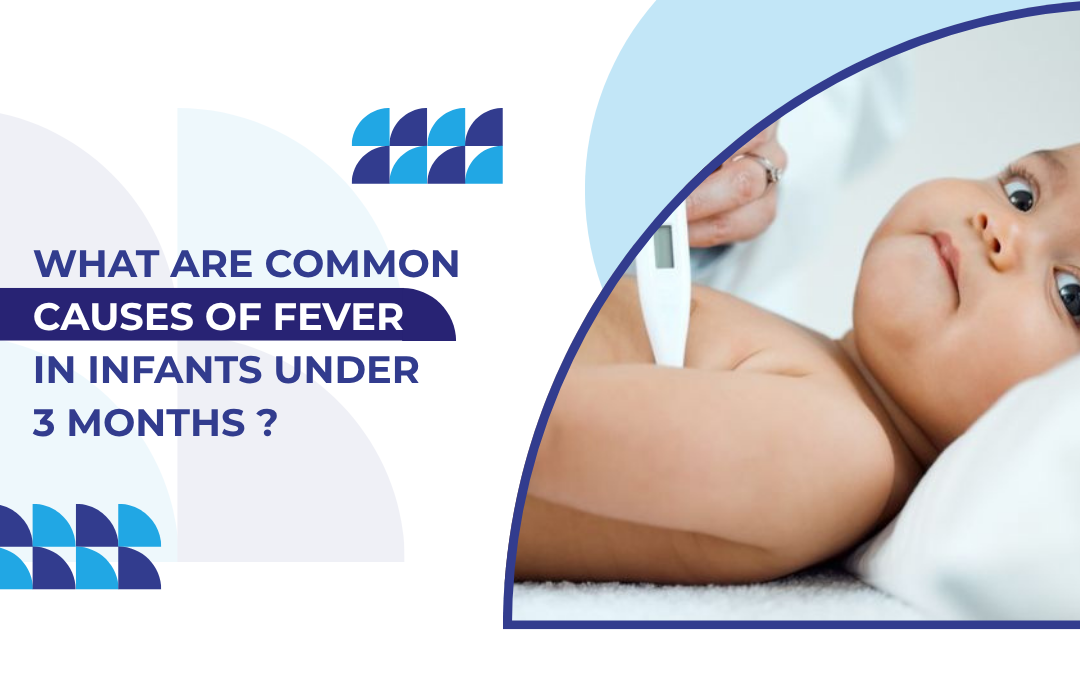
Fever in an infant under 3 months a rectal temperature of 100.4°F (38°C) or higher is most often caused by viral infections, but can also signal serious bacterial infections of the blood, urine, or lungs, and always requires urgent medical assessment rather than home treatment. Because a young baby’s immune system is still immature, even a mild-seeming fever can be the first and only sign of a significant infection, so it should never be watched and waited on at home.
According to an expert paediatrician at Echelon Hospital, a multispecialty hospital in Kopar Khairane, “In a baby under three months, fever is never something to observe at home overnight at this age the warning signs can be subtle and the cause serious, so the safest thing a parent can do is have the baby seen by a doctor straight away.”
What Causes Fever in Infants Under 3 Months?
A fever is a sign the body is fighting something, and in very young infants the possible causes range from common viruses to serious infections that need immediate treatment. At Echelon Hospital, Kopar Khairane, any infant under 3 months with a fever is assessed urgently to find the cause.
- Viral Infections: Common viruses including those causing colds, flu, and gut infections are the most frequent cause of fever in young infants. Even so, a doctor must confirm it is viral, because the symptoms can overlap with serious bacterial illness.
- Serious Bacterial Infections: Infections of the urine (UTI), blood (sepsis), or the covering of the brain (meningitis) are less common but dangerous, and are a key reason fever at this age is treated as an emergency until these are ruled out.
- Respiratory Infections: Infections of the lungs and airways, such as pneumonia or bronchiolitis, can cause fever alongside fast or laboured breathing, cough, or feeding difficulty in small babies.
- Post-Vaccination Fever: A mild fever can occur in the day or two after routine vaccinations. While usually harmless, in a baby under 3 months it should still be discussed with a doctor rather than assumed to be the cause.
- Overheating (rare): Excessive bundling or a hot environment can briefly raise a baby’s temperature, but a true fever should never be attributed to this without medical evaluation first.
Because the cause cannot be told apart by symptoms alone at this age, professional assessment is the only safe way to distinguish a minor virus from something serious.
Is your baby under 3 months running a temperature? Seek medical care without delay.
Warning Signs and When to Seek Immediate Care
For infants under 3 months, the rule is simple: a fever is always a reason to seek medical care promptly. Certain accompanying signs make it an even more urgent emergency requiring immediate attention.
|
Sign |
What to Do |
|
Temperature 100.4°F (38°C) or higher |
Seek medical care immediately |
|
Poor feeding or refusing feeds |
Urgent assessment needed |
|
Unusual drowsiness or floppiness |
Emergency – go to hospital |
|
Fast, laboured, or grunting breathing |
Emergency – go to hospital |
|
Persistent crying or rash |
Urgent assessment needed |
- Measure Correctly: A fever in infants is defined by a rectal temperature of 100.4°F (38°C) or above, which is the most accurate method at this age. If you record this, contact a doctor straight away rather than waiting.
- Watch Feeding and Alertness: Refusing feeds, far fewer wet nappies, unusual sleepiness, or being difficult to wake are important warning signs in a small baby and need urgent medical attention.
- Breathing and Skin: Fast or laboured breathing, grunting, a bluish tinge, or a rash that does not fade when pressed are emergencies and mean the baby should be taken to hospital immediately.
- Important: Fever sometimes appears after routine immunisations, so understanding which vaccines a newborn needs helps parents recognise expected mild reactions but in a baby under 3 months, any fever should still be checked by a doctor rather than assumed to be vaccine-related.
Because young infants can deteriorate quickly, it is always safer to have a feverish baby under 3 months assessed by a paediatrician than to wait and watch at home.
Why Choose Echelon Hospital for Newborn & Infant Care ?
The paediatric team at Echelon Hospital, Kopar Khairane, focuses on the careful assessment and care of newborns and young infants. Fever in babies under 3 months is approached with the urgency it deserves, working through a structured evaluation to identify the cause quickly and start the right treatment without delay. Call +91 89895 85050 to book your consultation.
FAQ
What temperature counts as a fever in a baby under 3 months?
A rectal temperature of 100.4°F (38°C) or higher is considered a fever in infants. At this age, any such reading needs prompt medical assessment, regardless of how well the baby otherwise seems.
Why is fever in a young infant treated so seriously?
A baby’s immune system is still immature, so infections can spread quickly and fever may be the only early sign of a serious illness. Prompt assessment allows any dangerous cause to be found and treated early.
Should I give my baby fever medicine at home first?
No, you should not start fever medication in a baby under 3 months without medical advice. Contact a doctor first, as the priority is finding the cause rather than just lowering the temperature.
Can teething cause fever in young infants?
Teething does not usually cause true fever and rarely occurs this early. Any genuine fever in a baby under 3 months should be assumed to have another cause and checked by a doctor.
What will the doctor do for a feverish young infant?
The doctor examines the baby and may run tests on blood, urine, and sometimes other samples to identify the cause, since serious infections must be ruled out at this age, and starts treatment based on the findings.
References:
-
-
-
- Fever in Infants and Children – National Institutes of Health (NIH) / MedlinePlus: https://medlineplus.gov/fever.html
- Newborn Health – World Health Organization (WHO): https://www.who.int/health-topics/newborn-health
-
-