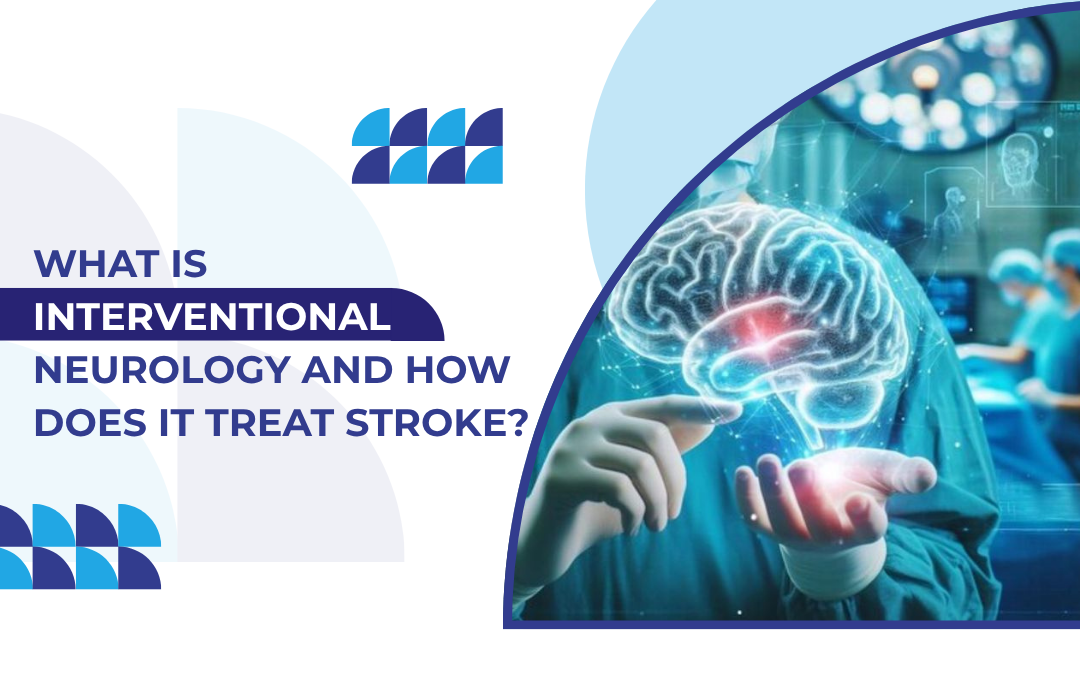
Interventional neurology is a minimally invasive specialty that treats conditions of the brain and spine’s blood vessels using thin catheters guided through the arteries, avoiding open surgery. In stroke, it allows doctors to physically remove or dissolve a clot blocking blood flow to the brain, ideally within hours of symptom onset, dramatically improving the chance of recovery. Because brain cells die quickly during a stroke, these treatments are most effective when started as early as possible.
According to an expert neurologist at Echelon Hospital, a multispecialty hospital in Kopar Khairane,
“In stroke, time is brain. Every minute a clot stays in place, millions of brain cells are lost, and interventional techniques now let us reopen a blocked artery through a pinhole in the groin rather than opening the skull, which has completely changed what recovery can look like.”
What Is Interventional Neurology?
Interventional neurology (also called neurointervention or endovascular neurology) treats diseases of the blood vessels supplying the brain and spine from inside the vessel itself, using image-guided catheters.
- Catheter-Based Access: A thin, flexible tube (catheter) is inserted through a small puncture, usually in the groin or wrist, and navigated through the arteries up to the brain using live X-ray imaging, avoiding any large incision.
- Image Guidance: Real-time angiography lets the doctor see the blood vessels and the exact site of a blockage, narrowing, or abnormality, guiding the treatment precisely to where it is needed.
- Minimally Invasive Repair: Through the catheter, the doctor can remove clots, open narrowed arteries, seal aneurysms, or block abnormal vessels all from within the vessel, without open brain or spine surgery.
- Faster Recovery: Because there is no large wound, patients generally recover faster, with shorter hospital stays and less risk than traditional open procedures, though the approach depends on the individual condition.
Beyond stroke, interventional neurology also treats brain aneurysms, arteriovenous malformations, and narrowed neck arteries, but its most time-critical use is in acute stroke.
Want to know if you or a loved one is at risk of stroke?
How Does Interventional Neurology Treat Stroke?
In an ischemic stroke the most common type, caused by a clot blocking a brain artery interventional neurology restores blood flow as quickly as possible to save brain tissue. The treatment chosen depends on the type of stroke and how soon the patient reaches hospital.
|
Procedure |
What It Does |
Best For |
|
Mechanical thrombectomy |
Physically removes the clot via catheter |
Large-vessel clot blockages |
|
Thrombolysis (clot-dissolving) |
Drug dissolves the clot |
Early ischemic stroke |
|
Angioplasty & stenting |
Opens narrowed brain/neck arteries |
Severe artery narrowing |
|
Aneurysm coiling |
Seals a bulging vessel from inside |
Brain aneurysms |
- Mechanical Thrombectomy: A catheter is guided to the blocked brain artery and a device physically grips and removes the clot, restoring blood flow. It is most effective when performed within hours of symptom onset for large-vessel strokes.
- Thrombolysis: In suitable patients, a clot-dissolving medication can be delivered to break down the clot, given within a strict time window after symptoms begin for the best results.
- Angioplasty and Stenting: When a brain or neck artery is dangerously narrowed, a balloon and stent can be used to open it and keep it open, reducing the risk of a future stroke.
- Important: Stroke is a time-critical emergency much like a cardiac event, and recognising it early matters as much as recognising the warning signs of a heart attack, sudden face drooping, arm weakness, or slurred speech means calling emergency services immediately, not waiting to see if it passes.
The right stroke treatment depends on stroke type, timing, and individual factors, and must be decided rapidly by a neurology team, which is why reaching hospital fast is critical.
Why Choose Echelon Hospital for Stroke & Neurology Care ?
The neurology team at Echelon Hospital, Kopar Khairane, focuses on the rapid assessment and treatment of stroke and other neurological emergencies. The team works within a coordinated stroke pathway where diagnosis, imaging, and treatment decisions happen quickly, because outcomes in stroke depend heavily on how fast the right treatment is started.
FAQ
What is the difference between neurology and interventional neurology?
Neurology diagnoses and treats brain and nerve disorders mainly with medication and clinical care, while interventional neurology uses catheter-based, minimally invasive procedures to treat blood vessel problems like stroke and aneurysms from inside the vessel.
How quickly must a stroke be treated?
Stroke treatment is most effective within a few hours of symptom onset. The sooner blood flow is restored, the more brain tissue can be saved, which is why stroke is treated as an emergency.
Is interventional neurology treatment safe?
These minimally invasive procedures are well-established and generally carry less risk and faster recovery than open surgery, though every procedure has risks that are weighed against the danger of an untreated stroke.
What are the warning signs of a stroke?
Sudden face drooping, arm weakness, and slurred speech are the classic signs (remembered as FAST). Other signs include sudden confusion, vision loss, severe headache, or trouble walking.
Can a stroke be prevented?
Many strokes can be prevented by controlling blood pressure, diabetes, and cholesterol, not smoking, staying active, and treating conditions like irregular heartbeat or narrowed neck arteries early.
References:
-
-
-
-
- Stroke – National Institute of Neurological Disorders and Stroke (NINDS): https://www.ninds.nih.gov/health-information/disorders/stroke
- Stroke – World Health Organization (WHO): https://www.who.int/news-room/fact-sheets/detail/stroke
-
-
-