
Coronary Angioplasty to Treat a Blocked Artery After a Heart Attack
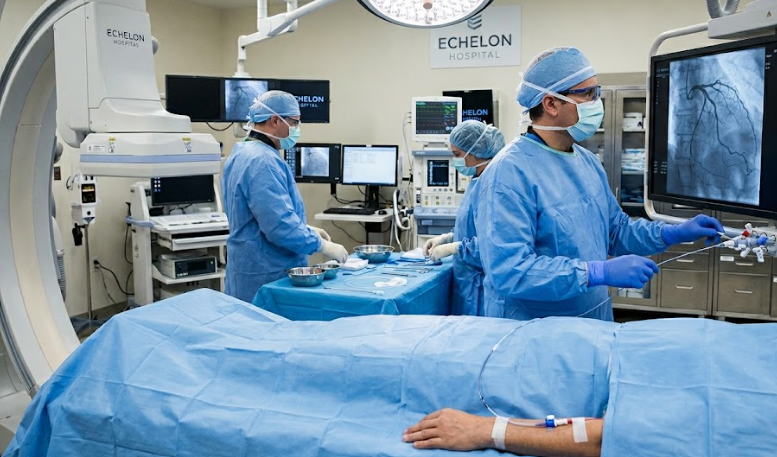
A 58-year-old man arrived with chest pain and breathlessness and was found to have a major blockage in one of his coronary arteries. The cardiology team at Echelon Hospital, Navi Mumbai performed an emergency coronary angioplasty with stent placement to restore blood flow. The artery was reopened, the chest pain settled, and he was walking within two days, discharged on the third with a clear recovery plan.
PATIENT PROFILE
| Name | Ramesh Patil (name changed for privacy) |
| Age | 58 years |
| Gender | Male |
| Occupation | Retired bank employee |
| Chief Complaint | Chest pain, breathlessness, sweating |
| Affected Area | Right coronary artery |
| Previous History | Hypertension, type 2 diabetes |
| Date of Treatment | April 2026 |
| Outcome | Excellent |
Name changed for privacy. Case published with patient consent.
THE PROBLEM
The pain started while he was getting ready for his morning walk. He thought it was acidity at first.
Ramesh had been managing high blood pressure and diabetes for years, both on medication. That morning he felt a heavy, gripping pain in the centre of his chest that spread to his left arm, along with sweating and shortness of breath. His son brought him to the emergency department within the hour. Knowing the warning signs of a heart attack and acting fast made a real difference to how this case turned out.
An ECG was taken immediately, followed by cardiac biomarker blood tests. The findings pointed to an acute coronary event. A diagnostic cardiac catheterisation was carried out, which showed a significant blockage in the right coronary artery. The other vessels had mild disease but did not need intervention at that stage. Time mattered, so the team moved to reopen the blocked artery without delay.
Chest pain that lasts more than a few minutes is an emergency.
CONSULTATION AND TREATMENT PLAN
“When a major artery is blocked during a heart attack, the priority is to restore blood flow as fast as possible. Coronary angioplasty with a stent lets us open the artery through a small puncture, without opening the chest, and the muscle that was starved of blood starts recovering almost immediately.”
– Cardiology Team, heart hospital in Navi Mumbai
Assessment findings
- ECG changes consistent with an acute coronary event
- Raised cardiac biomarkers confirming heart muscle injury
- Single significant blockage in the right coronary artery on catheterisation
- Mild, non-critical disease in other vessels
- Background of hypertension and type 2 diabetes
- Patient goal: fastest safe treatment, avoid open-heart surgery
Why angioplasty and stenting
With a single critical blockage and an artery that was otherwise suitable, percutaneous coronary intervention was the right choice over open bypass surgery. It is minimally invasive, done through a small puncture in the wrist or groin, and recovery is far quicker. For patients with more extensive blockages, the alternative would have been open heart surgery, which involves a longer stay and recovery. A drug-eluting stent was planned to keep the artery open and lower the chance of it narrowing again.
The plan was explained to Ramesh and his family at the bedside, including the procedure, the stent, and the medication he would need afterwards.
| Procedure | Coronary Angioplasty with Stent |
| Artery Treated | Right coronary artery |
| Technique | Percutaneous coronary intervention, drug-eluting stent |
| Access | Radial (wrist) approach |
| Anaesthesia | Local, at the access site |
| Session Type | Single emergency procedure |
| Complications | None |
Want clarity on whether angioplasty or surgery suits your condition?
PROCEDURE DETAILS
1. ECG and biomarker results reviewed, consent taken
2. Local anaesthesia given at the wrist access site
3. A thin catheter passed through the radial artery up to the heart
4. Contrast dye injected to map the blockage under imaging
5. A guidewire crossed the blocked segment of the right coronary artery
6. A small balloon inflated to open the narrowed section
7. A drug-eluting stent placed and expanded to hold the artery open
8. Blood flow rechecked on imaging to confirm the artery was clear
9. Catheter removed and the access site sealed
10. Patient shifted to the cardiac care unit for monitoring
POST TREATMENT CARE AND RECOVERY
No open surgery means a shorter stay and a quicker return to normal life. A few things matter in the weeks that follow.
Protecting the heart
- Take all prescribed medicines exactly as advised, especially blood thinners
- Do not stop any heart medication without speaking to the cardiologist
- Keep blood pressure and blood sugar under tight control
- Attend every follow-up and scheduled test
Everyday care
- Start with light activity and increase gradually as advised
- Follow a low-salt, low-fat, diabetic-friendly diet
- Stop smoking completely and avoid tobacco in any form
- Watch for any return of chest pain, breathlessness, or swelling
When to call the hospital
Contact the hospital straight away if there is fresh chest pain, sudden breathlessness, bleeding or swelling at the access site, or fainting. These need urgent review. Regular cardiology follow-up is essential to monitor heart function and adjust medication. Ongoing diabetes and nutrition care also plays a big part in protecting the heart long term.
RESULTS
PATIENT FEEDBACK
R – Ramesh Patil (name changed for privacy) • Verified Patient • Echelon Hospital ★★★★★ April 2026
“I came in with severe chest pain and was treated very quickly. The doctors explained everything to my family and I felt safe the whole time. I am back to my normal routine now.”
Procedure: Coronary Angioplasty with Stent • Right Coronary Artery Blockage • Echelon Hospital • April 2026 • Published with consent
WHY CHOOSE ECHELON HOSPITAL
Echelon Hospital approaches cardiac emergencies with speed and a clear plan: confirm the diagnosis fast, restore blood flow, and protect the heart muscle. For Ramesh, that meant an emergency angioplasty through the wrist with no open surgery, backed by 24/7 emergency cardiac care and a fully equipped 140-bedded facility. The focus stays on minimally invasive treatment, careful monitoring, and clear explanations so families understand each step.
Talk to our cardiology team about your heart health.
FAQs
Q1. What is the difference between angioplasty and bypass surgery?
Angioplasty opens a blocked artery through a small puncture using a balloon and stent, with no chest incision. Bypass is open surgery that reroutes blood around blockages, usually chosen for multiple or complex blockages.
Q2. How long does recovery take after coronary angioplasty?
Most patients are walking within a day or two and discharged in two to three days. Normal routine usually resumes within a week or two, depending on overall health.
Q3. Will the stent need to be replaced later?
A drug-eluting stent is designed to stay in place permanently. With prescribed medication and lifestyle control, the risk of the artery narrowing again is low.
Q4. Is angioplasty safe for diabetic and hypertensive patients?
Yes, it is commonly performed in such patients. Good control of blood sugar and blood pressure both before and after the procedure improves the outcome.
Q5. What lifestyle changes are needed after a stent?
A heart-healthy diet, regular light activity, no smoking, controlled blood sugar and blood pressure, and taking all medicines as prescribed are key to long-term recovery.
Disclaimer: This case study is for general information only and reflects one patient’s outcome. Results vary from person to person. It is not a substitute for a professional medical consultation. Please book an assessment to discuss your own condition.