
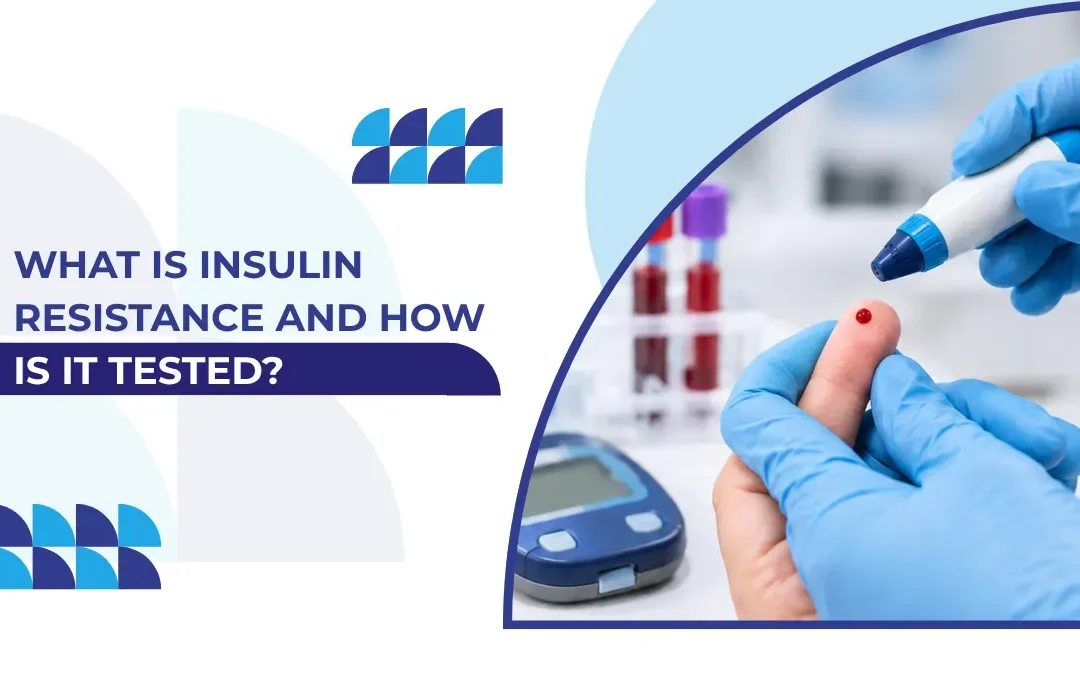
Insulin resistance develops when cells in the muscles, liver, and fat tissue no longer respond well to insulin. The pancreas compensates by releasing more of it, so blood sugar readings can stay within a normal range for years even as the underlying problem builds. That gap between what a routine reading shows and what’s actually happening is exactly why it goes unnoticed for so long.
According to the senior diabetologist at Echelon Hospital, “Insulin resistance often shows up years before diabetes does. Catching it early through the right blood work changes the whole treatment approach.”
How Is Insulin Resistance Actually Tested?
There’s no single blood draw that settles the question on its own. Doctors lean on a handful of markers together rather than one isolated number.
- Fasting Insulin Test: Checks insulin levels after an overnight fast. High insulin paired with a normal sugar reading is often the first sign something’s off.
- HOMA-IR Score: Combines fasting glucose and fasting insulin into a single calculated value. It’s a more direct way to quantify resistance than guessing from symptoms alone.
- Fasting Blood Glucose: A basic baseline reading. It can hold steady in the normal range for a long while even after resistance has started building.
- Oral Glucose Tolerance Test (OGTT): You drink a glucose solution and get rechecked over the next couple of hours to see how quickly your body clears it.
None of these tests tend to get ordered alone. Echelon’s Diabetes & Nutrition Care team decides on the right combination based on your case and builds the follow-up plan from there.
Curious whether your numbers point toward insulin resistance?
Who Should Get Tested, and What Happens After?
Insulin resistance rarely announces itself directly. Most people end up getting tested because of something else. Maybe a symptom. Maybe a family history. Maybe a lab result that came back slightly off.
- Family History of Diabetes: Having a parent or sibling with type 2 diabetes is often reason enough on its own to test early.
- PCOS or Irregular Cycles: Insulin resistance shows up alongside PCOS often enough that a gynaecology visit is where it frequently gets caught first.
- Skin and Weight Changes: Darkened skin near the neck or underarms, along with weight collecting around the midsection, are physical clues doctors look for.
- A Borderline Sugar or HbA1c Reading: A result stuck somewhere between “normal” and “diabetic” is typically why a fuller panel gets ordered in the first place.
If your last report landed in that in-between zone, it helps to understand what each number was measuring to begin with. This breakdown of the HbA1c vs Fasting Blood Sugar Test is a good place to start.
Why Choose Echelon Hospital for Insulin Resistance Testing?
Echelon Hospital is a NABH pre-accredited multispecialty hospital in Kopar Khairane, Navi Mumbai. Insulin resistance testing, diabetology consultation and nutrition counselling are available under one roof. This can be useful when test results need to be interpreted alongside your overall health, lifestyle and metabolic risk factors. For people searching for diabetes centres near me in Navi Mumbai, having testing and specialist guidance in the same hospital can make it easier to understand what the results mean and discuss appropriate next steps.
Call +91 8989585050 to book a consultation.
FAQ
Can insulin resistance be reversed?
Often yes. Caught early enough, weight loss, movement, and dietary changes can genuinely turn things around.
Do I need to fast before getting tested?
For the fasting insulin and glucose tests, yes, around 8 hours without food. HbA1c doesn’t need fasting.
What counts as a "high" HOMA-IR score?
The reference range can vary by laboratory and the method used. Your doctor will usually interpret the score alongside your fasting glucose and insulin levels.
Does having insulin resistance mean I'll get diabetes?
Not necessarily. It raises the odds but isn’t a guarantee, especially if changes start early enough.
References
- Cleveland Clinic, Insulin Resistance: https://my.clevelandclinic.org/health/diseases/22206-insulin-resistance
- NIDDK (NIH), Insulin Resistance & Prediabetes: https://www.niddk.nih.gov/health-information/diabetes/overview/what-is-diabetes/prediabetes-insulin-resistance
Disclaimer: This blog is for educational purposes only and does not constitute medical advice. Please consult a doctor for diagnosis and treatment.