
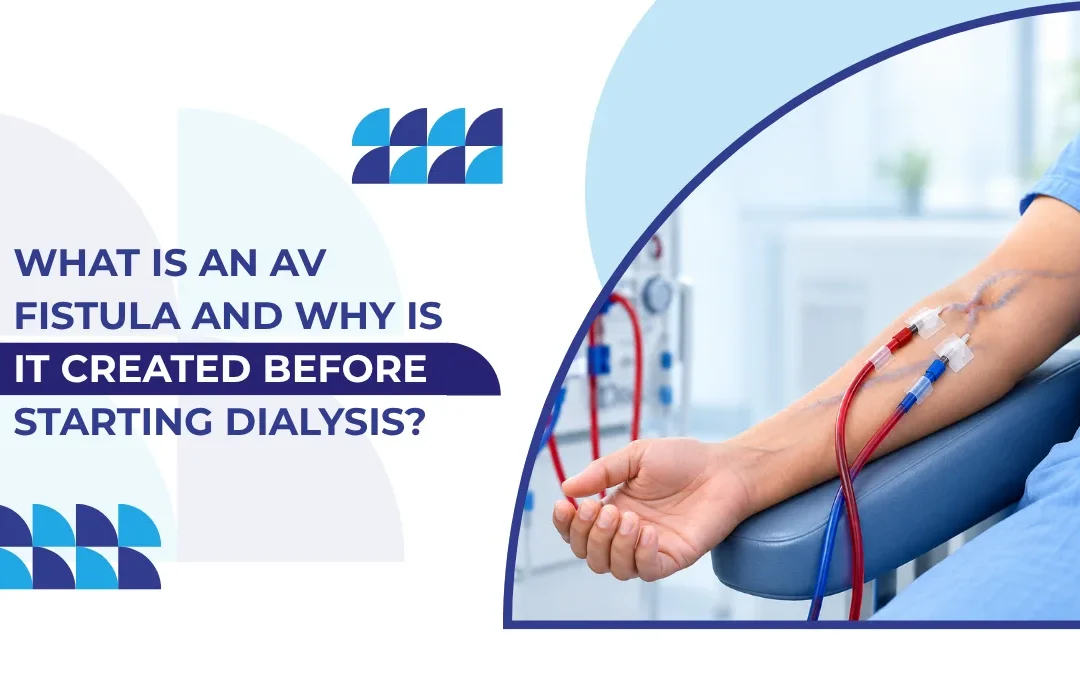
An AV fistula is a small surgical link between an artery and a vein, usually made in the forearm. Once the two are joined, more blood flows through the vein and it slowly grows stronger and wider. There’s a good reason for this. Dialysis needs an access point that won’t fail under repeated use. That is why most nephrologists plan the fistula early, well before dialysis is due to start.
According to the senior nephrologist at Echelon Hospital, a multi-specialty hospital in Navi Mumbai, “Many patients assume the fistula is part of dialysis. In truth it comes first. We create it a few weeks ahead so the vein has time to mature. When you begin on a healthy fistula, the rest of the treatment tends to go far more smoothly.”
What Does an AV Fistula Actually Do?
It isn’t the machine and it isn’t the treatment. It’s really the doorway. A fistula gives dialysis a steady, high-flow route in and out so your blood can be cleaned well each time.
- Strengthens the vein: The added blood flow builds up the vein wall until it can take needles three times a week without collapsing.
- Outlasts the alternatives: A good fistula often keeps working for years, while catheters and grafts tend to fail within months.
- Carries a lower infection risk: Since it uses your own vessels and stays under the skin, infections are much rarer than with a tube going into the body.
- Improves dialysis quality: Better flow filters more blood each session, and most patients notice the difference in how they feel.
If your kidney function is slipping and dialysis is close, now is the time to speak with a team that provides comprehensive dialysis care under one roof.
Advised to start dialysis soon and unsure about access options?
When Should an AV Fistula Be Created?
This is where timing counts more than people realise. A fistula can’t be used the day it’s made. It needs a few weeks to settle and mature first.
- Two to three months before dialysis: That head start gives the vein enough time to develop properly.
- As kidney function declines: A steadily falling eGFR is often when your nephrologist raises the subject. It’s forward planning, not bad news.
- When a catheter is already in place: A fistula is the safer long-term option, so an early switch lowers your infection risk.
- Once vein mapping is done: A quick ultrasound confirms your vessels can handle it before surgery is scheduled.
Understanding what comes next helps too. This related read on when a kidney patient needs dialysis explains the stage at which treatment usually becomes necessary.
Why Choose Echelon Hospital for Dialysis Care?
Echelon Hospital is a NABH pre accredited multispecialty hospital in Kopar Khairane, with a dedicated nephrology and vascular surgery team that manages every stage of dialysis access from fistula creation through to ongoing treatment. People searching for dialysis centres near me are usually looking for one clear answer: has their kidney function reached the point of needing access surgery. It’s a common question, though many still put off booking. A simple assessment can tell you what’s needed and when. Call +91 8989585050 to book a consultation.
FAQ
How long does an AV fistula take to heal before use?
Usually six to eight weeks, sometimes longer, so the vein matures fully.
Is AV fistula surgery painful?
It’s done under local anaesthesia and most patients go home the same day.
Can I use my arm normally after a fistula?
Yes, for daily tasks. Just avoid heavy pressure or tight sleeves on that arm.
What happens if a fistula doesn't mature?
Your nephrologist may suggest a revision or an alternative access option.
References
- National Kidney Foundation, Hemodialysis Access: https://www.kidney.org/atoz/content/hemoaccess
- World Health Organization, Kidney Disease: https://www.who.int/news-room/fact-sheets/detail/kidney-disease
Disclaimer: This blog is for educational purposes only and is not a substitute for medical advice. Please consult your nephrologist before making any decisions about dialysis or fistula surgery.