
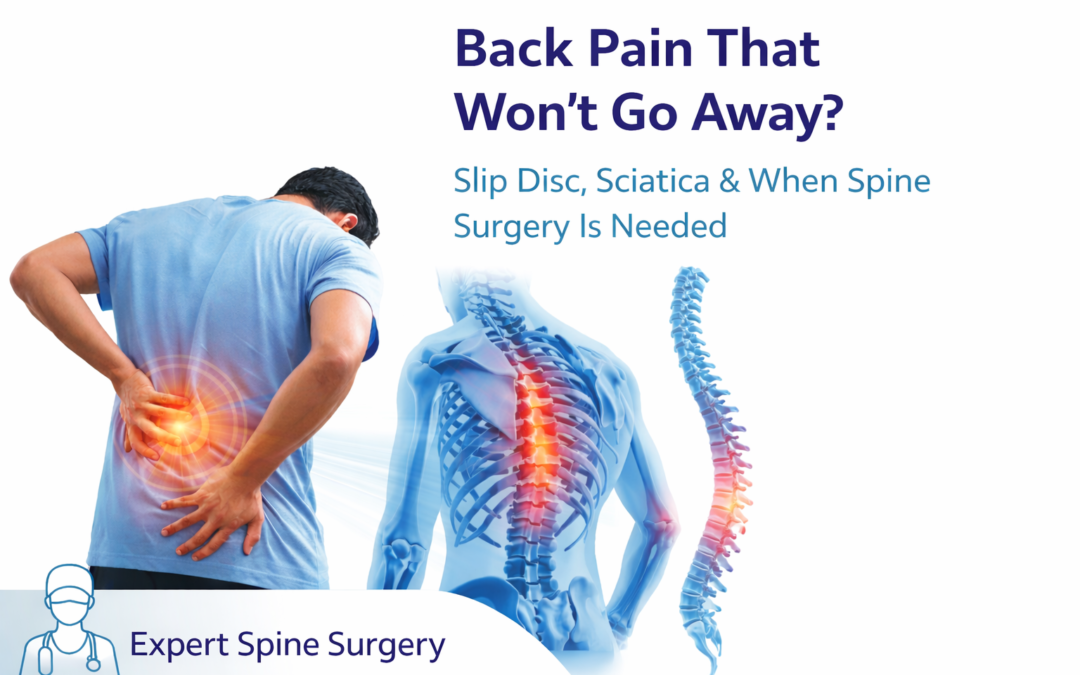
Back pain is one of the most common health complaints in India. Almost everyone experiences it at some point after lifting something heavy, sitting too long, or waking up in the wrong position. In most cases, it goes away within a few days.
But what if the pain keeps coming back? What if it travels down your leg, causes numbness in your feet, or makes it difficult to stand up straight? That kind of pain is your body’s way of saying something more serious may be going on.
In this blog, we explain the most common causes of persistent back pain including slip disc and sciatica and help you understand when it’s time to stop relying on painkillers and consider Spine Surgery in Kopar Khairane by consulting a specialist in Navi Mumbai.
1. Why Does Back Pain Happen?
The spine is one of the most complex structures in the human body. It is made up of 33 bones (vertebrae) stacked on top of each other, separated by soft cushion-like discs, and supported by a network of muscles, ligaments, and nerves.
When any part of this structure is stressed, damaged, or compressed, back pain can occur. The most common causes include:
Poor posture:
Muscle strain:
Slip disc (herniated disc):
Degenerative disc disease:
Spinal stenosis:
Spondylolisthesis:
Arthritis of the spine:
Sciatica:
Understanding which of these is causing your pain is the first and most important step. That’s why proper diagnosis including imaging such as MRI is essential before any treatment is started, especially if you may require Spine Surgery in Kopar Khairane.
2. What Is a Slip Disc?
A slip disc medically called a herniated or prolapsed disc is one of the most common causes of severe back pain in adults aged 30 to 55.
Each spinal disc has two parts: a tough outer ring and a soft jelly-like centre. When the outer ring weakens, the inner gel pushes outward and presses on nerves.
Important: Many people with a slip disc do NOT need surgery. In most cases, the condition improves with proper physiotherapy and medication. Spine Surgery in Kopar Khairane is only considered when conservative treatment fails or serious symptoms appear.
Common Causes of Slip Disc:
- Sitting for long hours without breaks
- Heavy lifting with improper technique
- Sudden twisting or bending movements
- Excess body weight putting pressure on the lower spine
- Age-related wear and tear (most common after age 35)
- Previous back injuries
Symptoms of a Slip Disc:
- Sharp or burning pain in the lower back or neck (depending on which part of the spine is affected)
- Pain that radiates down one leg (if it’s in the lower back) or one arm (if in the neck)
- Numbness or tingling in the legs, feet, arms, or hands
- Muscle weakness difficulty lifting objects or maintaining grip
- Pain that worsens when sitting, bending forward, or coughing
- Relief when lying flat or walking slowly
Important: Many people with a slip disc do NOT need surgery. In most cases, the condition improves with proper physiotherapy, rest, medication, and lifestyle changes. Surgery is considered only when conservative treatment fails or there are serious neurological symptoms.
3. What Is Sciatica?
Sciatica is not a diagnosis in itself it is a symptom. It refers to pain that follows the path of the sciatic nerve, which runs from the lower back through the hips and buttocks and down each leg.
The most common cause of sciatica is a slip disc pressing on the sciatic nerve root. Other causes include spinal stenosis, a bone spur, or a muscle spasm deep in the buttock (piriformis syndrome).
What Sciatica Feels Like:
- A sharp, shooting or burning pain from the lower back down one leg
- Pain that worsens when sitting for long periods such as during a long commute or desk job
- Numbness or “electric shock” sensation in the leg or foot
- Weakness in the leg, making it difficult to walk or climb stairs
- Discomfort on one side of the body (rarely both)
Sciatica is often confused with general back pain, but the key difference is that the pain travels it radiates from the back into the leg, sometimes all the way to the foot. If you notice this pattern, it is important to consult a spine specialist rather than simply self-medicating.
4. Warning Signs You Should Not Ignore
Seek immediate medical attention if you notice:
- Sudden loss of bladder or bowel control (this could be Cauda Equina Syndrome a surgical emergency)
- Severe weakness in both legs or inability to walk
- Back pain after a fall, accident or injury
- Back pain accompanied by fever and unexplained weight loss
- Progressive numbness spreading to both legs or the groin area
- Back pain that wakes you from sleep and keeps getting worse over weeks
These symptoms may indicate a serious underlying condition that needs urgent evaluation. Do not delay contact Echelon Hospital’s emergency line immediately if you or someone you know experiences any of these.
5. How Is Back Pain Diagnosed?
Before recommending any treatment, a spine specialist will perform a thorough evaluation. This typically includes:
- Medical History & Physical Examination
The doctor will ask about the location, duration, and nature of your pain, as well as any activities that make it better or worse. A neurological examination checks your reflexes, muscle strength, and sensation in your legs and feet.
- Imaging Studies
X-Ray: Shows the alignment of your spine and can detect bone problems, fractures, or narrowing of disc spaces. However, X-rays cannot show disc herniations or nerve compression.
MRI Scan: The most detailed imaging tool for spine conditions. It shows the discs, nerves, spinal cord, and surrounding soft tissues clearly making it the gold standard for diagnosing slip disc and sciatica. Echelon Hospital is equipped with advanced MRI facilities.
CT Scan: Useful for evaluating bony structures and can be combined with a myelogram (dye injection) for detailed nerve imaging.
Nerve Conduction Study (NCS) / EMG: Measures how well your nerves are working and can confirm nerve compression.
6. Non-Surgical Treatments – The First Step
The good news is that 80 to 90% of back pain cases including slip disc and sciatica improve with non-surgical treatment over weeks to months. Surgery is always the last resort, not the first.
Conservative Treatment Options:
- Rest & Activity Modification: Short-term rest (1–2 days) followed by gradual return to movement. Complete bed rest for extended periods is not recommended as it can worsen outcomes.
- Physiotherapy: A structured exercise programme to strengthen the core and back muscles, improve posture, and reduce nerve compression. This is the most important non-surgical treatment for long-term recovery.
- Medications: Anti-inflammatory drugs (NSAIDs), muscle relaxants, and nerve pain medications (such as pregabalin or gabapentin) are commonly prescribed for short-term relief.
- Heat & Cold Therapy: Applying ice in the first 48 hours of acute pain, followed by heat to relax muscles.
- Epidural Steroid Injections: Corticosteroids injected near the affected nerve can reduce inflammation and provide significant pain relief, allowing patients to participate in physiotherapy.
- Posture Correction & Ergonomics: Adjusting your workstation, using a lumbar support chair, and correcting how you lift, sit, and sleep can dramatically reduce recurrence.
- Weight Management: Excess body weight especially around the abdomen significantly increases pressure on the lumbar spine. Even a 5–10 kg reduction can noticeably relieve symptoms.
At Echelon Hospital, the team ensures every patient gets the best chance of recovery before considering Spine Surgery in Kopar Khairane.
7. When Is Spine Surgery Needed?
Surgery is considered only when conservative treatment has been tried for an adequate period usually 6 to 12 weeks and has not provided sufficient relief, OR when there are serious neurological symptoms that require urgent intervention.
Surgical intervention is typically recommended when:
- Pain is severe and significantly affecting your quality of life despite proper non-surgical treatment
- There is progressive weakness or numbness in the leg or foot
- You are unable to walk properly or perform basic daily activities
- There is loss of bladder or bowel control (emergency surgery)
- Imaging confirms significant nerve compression that matches your symptoms
- The condition has failed to improve after physiotherapy, medication, and injections
The decision to operate is never taken lightly. At Echelon Hospital, our spine surgeons discuss all options with patients in detail before recommending surgery, ensuring you are fully informed and comfortable with the treatment plan.
8. Types of Spine Surgery Performed at Echelon Hospital
Microdiscectomy
The most common surgery for a slip disc pressing on a nerve. A small incision is made, and the herniated portion of the disc is removed to relieve nerve pressure. It is a minimally invasive procedure with a short recovery time most patients go home within 24 to 48 hours and return to desk work within 2 to 4 weeks.
Laminectomy / Decompression Surgery
Part of the vertebra (lamina) is removed to create more space for the spinal cord and nerves. This is commonly used to treat spinal stenosis. It relieves pressure and reduces pain, numbness, and weakness.
Spinal Fusion
Two or more vertebrae are permanently joined together using bone grafts and metal hardware. This is done when there is instability in the spine for example, in spondylolisthesis or after a significant disc removal. It stabilises the spine and prevents abnormal movement that causes pain.
Foraminotomy
Enlarging the opening (foramen) through which nerve roots exit the spinal canal. This is used when a nerve root is being pinched by a bone spur or thickened ligament.
Minimally Invasive Spine Surgery (MISS)
Using advanced techniques and smaller incisions, MISS causes less muscle damage, less bleeding, shorter hospital stays, and faster recovery compared to traditional open surgery. Echelon Hospital’s spine team is experienced in minimally invasive approaches for suitable candidates.
9. What to Expect After Spine Surgery
Recovery varies depending on the type of surgery and the individual patient. Here is a general guide:
- Day 1–2: You will be encouraged to sit up and walk short distances the day after surgery. Pain is managed with medication.
- Week 1–2: Most patients return home. Light activities are allowed but avoid bending, lifting, or twisting.
- Week 2–6: Physiotherapy begins exercises to strengthen the back and core, improve flexibility, and restore normal movement.
- Week 6–12: Gradual return to normal activities. Desk jobs can usually be resumed by week 4–6; physical jobs may take 3 months.
- 3–6 Months: Full recovery for most patients. Follow-up imaging confirms successful outcome.
Long-term success after spine surgery depends heavily on following the physiotherapy programme, maintaining a healthy weight, correcting posture, and avoiding activities that stress the spine unnecessarily.
10. Practical Tips to Prevent Back Pain from Getting Worse
Sit correctly: Keep your back straight, feet flat on the floor, and use a chair with lumbar support. Take a 5- minute walk every hour.
Lift safely: Bend at the knees, not the waist. Keep the object close to your body and avoid twisting while lifting.
Sleep smart: Sleep on your side with a pillow between your knees, or on your back with a pillow under your knees not flat on your stomach.
Stay active: Regular low-impact exercise such as walking, swimming, or yoga strengthens the muscles that support your spine.
Maintain a healthy weight: Every extra kilogram around the waist adds pressure to your lumbar discs.
Stretch daily: Gentle stretching of the hamstrings, hip flexors, and lower back reduces muscle tension that contributes to disc compression.
Avoid prolonged inactivity: Extended bed rest actually slows recovery. Keep moving within your pain limits.
Do not self-medicate long-term: Repeatedly taking painkillers without identifying the root cause can mask worsening problems.
11. Spine Care at Echelon Hospital, Kopar Khairane, Navi Mumbai
At Echelon Hospital, we offer complete care from diagnosis to advanced Spine Surgery in Kopar Khairane ensuring personalised treatment for every patient.
Our team of experienced spine surgeons and orthopedic specialists works with physiotherapists, pain management doctors, and rehabilitation professionals to create treatment plans that are both medically sound and practically achievable for each patient.
Why Patients Choose Echelon Hospital for Spine Care:
Advanced MRI and CT diagnostic imaging available in-house
Experienced spine surgeons specialising in minimally invasive techniques
Dedicated physiotherapy and rehabilitation programme
Pain management clinic for non-surgical spine care
140-bedded fully air-conditioned facility in Kopar Khairane
Centrally located accessible from Vashi, Ghansoli, Airoli, Turbhe, and all of Navi Mumbai
Final Thoughts: Don’t Let Back Pain Become a Way of Life
Back pain even severe slip disc or sciatica is treatable. Most people recover fully with the right combination of physiotherapy, medication, and lifestyle changes. Surgery, when it is needed, modern Spine Surgery in Kopar Khairane is safe and effective, and modern minimally invasive techniques mean faster recovery and better outcomes than ever before.
The most important thing is not to ignore persistent pain. The longer a nerve is compressed, the greater the risk of permanent damage. Early diagnosis and the right treatment at the right time can make all the difference.
If you have been living with back pain that is not improving or if you are experiencing numbness, weakness, or pain shooting down your leg please do not wait. Book a consultation with our spine surgery team at Echelon Hospital today.