
For many couples, IVF offers a pathway to parenthood when natural conception becomes challenging due to factors such as blocked fallopian tubes, ovulation problems, reduced ovarian reserve, or male infertility concerns. The procedure involves carefully combining eggs and sperm in a laboratory and transferring the resulting embryo into the uterus.
The chances of IVF success are not the same for everyone. The IVF success rate depends on several factors, including the woman’s age, egg and sperm quality, embryo development, uterine health, lifestyle habits, and overall medical condition.
Understanding the IVF success rate by age and important IVF success factors can help couples prepare better and discuss suitable treatment options with their fertility specialist. At Echelon Hospital, highly qualified and experienced fertility specialists provide fertility care focused on detailed evaluation, advanced reproductive support, and personalised treatment plans. As a multispeciality hospital in Navi Mumbai, Echelon Hospital offers coordinated medical care to help couples navigate their IVF journey with appropriate guidance at every stage.
IVF Success Rate by Age
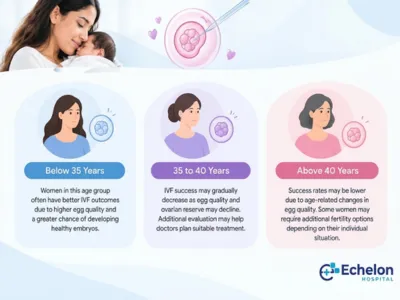
The IVF success rate by age is mainly influenced by changes in egg quantity and quality. Younger women generally have a higher chance of producing healthy embryos, while advancing age may increase the possibility of reduced ovarian reserve or chromosomal changes in embryos.
Age does not determine IVF success alone. Some women above 35 or 40 may achieve pregnancy with appropriate treatment planning, while younger patients may also face challenges due to other fertility factors.
Fertility assessment helps identify the factors affecting your chances of success. Discuss your options with a specialist at the best hospital in Navi Mumbai to plan the next steps.
10 Factors That Affect IVF Success Rate
- Age and Egg Quality
Age is a major factor in IVF success. It affects both ovarian reserve and egg quality, which decline over time, especially after 35.
- Sperm Quality
Count, movement, structure. All three can affect fertilisation and embryo development.
- Embryo Quality
Healthy embryo development is important for successful implantation and pregnancy.
- Uterine Health
Conditions like fibroids or an unhealthy uterine lining can interfere with implantation, making it harder for an embryo to settle in.
- Ovarian Reserve
The number of available eggs can influence the response to fertility medications and treatment outcomes.
- Lifestyle Factors
Smoking, heavy drinking, a poor diet, chronic stress, and little physical activity can all lower fertility and reduce your chances of a successful cycle.
- Underlying Medical Conditions
Conditions like PCOS, thyroid disorders, diabetes, or endometriosis need to be well managed alongside IVF treatment to give your cycle the best chance of success.
- Previous IVF History
Previous treatment responses and outcomes can help doctors modify future treatment strategies.
- Embryo Transfer Timing
The timing and technique of embryo transfer may influence implantation chances.
- Fertility Clinic Support
Advanced laboratory facilities, experienced specialists, and personalised treatment approaches contribute to better care planning.
How Can You Improve IVF Success Chances?
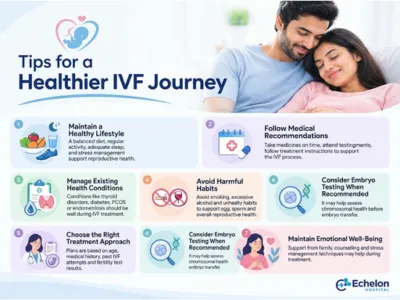
Some parts of IVF are out of your hands, but others aren’t. Following your doctor’s advice, looking after your health, and preparing your body before treatment are the areas where you can make a real difference.
There is no single trick that improves IVF chances for everyone, because every case is different. At Echelon Hospital in Navi Mumbai, experienced fertility specialists can guide you based on your health and treatment needs.
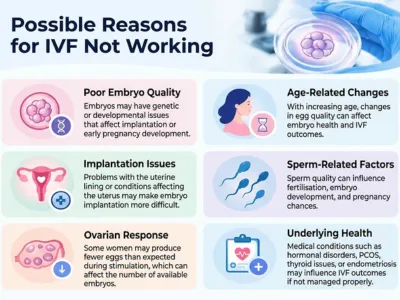
Why Does IVF Fail Sometimes?
IVF has worked for a huge number of couples, but implantation is a complex biological process. Even when embryos look healthy and treatment goes exactly as planned, pregnancy does not always follow. That is simply the reality.
IVF success rate after first attempt vary a lot from person to person. Some couples achieve pregnancy in the first cycle, while others may require additional attempts with changes in treatment strategy.
FAQ
1. Can IVF be successful on the first attempt?
2. Why does IVF fail despite good embryos?
3. Does age affect IVF success rate?
4. Is IVF more successful before age 35?
5. How many IVF attempts are usually needed?
Reference Links
- Centers for Disease Control and Prevention (CDC) – Assisted Reproductive Technology
https://www.cdc.gov/art/ - American Society for Reproductive Medicine (ASRM) – IVF Information
https://www.asrm.org/topics/topics-index/in-vitro-fertilization-ivf/
Disclaimer: The information shared in this content is for educational purposes and not for promotional use.